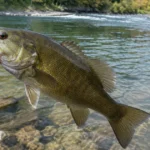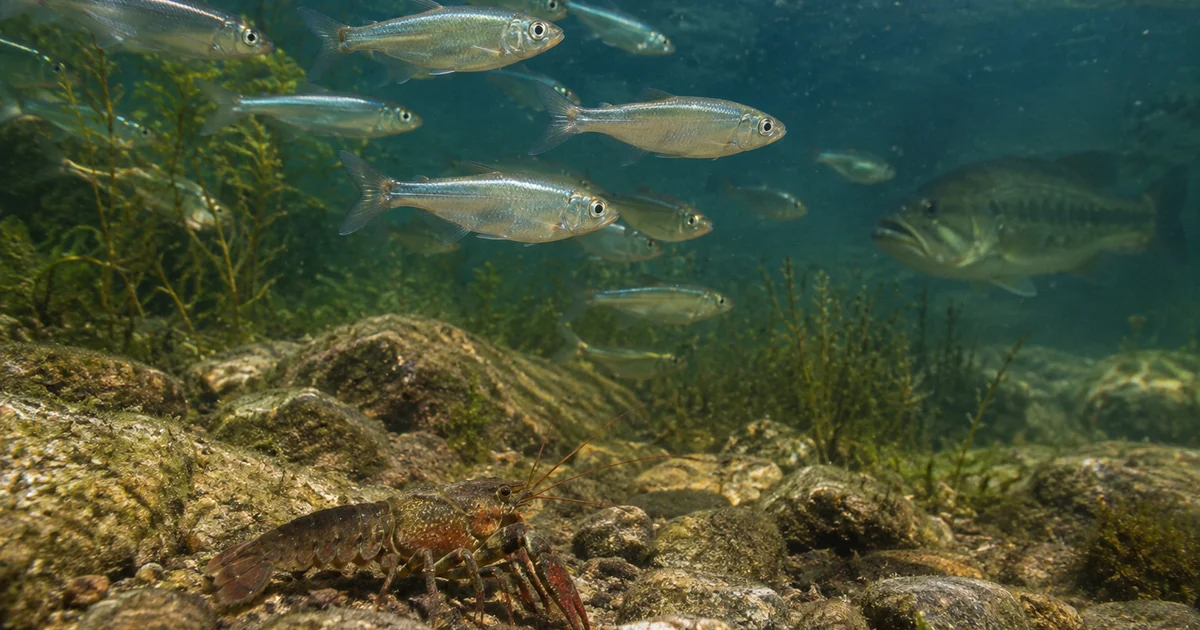
Bass eat whatever their water serves up, but three groups of prey carry most of the load: shad (threadfin and gizzard), crawfish, and bluegill (also called bream). Largemouth are the true opportunists of the family and will eat almost anything. Smallmouth lean hard on crawfish.
Knowing the menu isn’t trivia. It decides what you tie on: how big the lure is, what color it wears, what shape it has and how it moves. This guide walks through the main prey, when each one matters most and what it changes in your box, using the seasonal system from Bass Fishing Mastery.
Bass Fishing Mastery: the complete 86-page bass guide behind this article. See the guide →
The Three Prey Groups That Feed Most Bass
| Prey | Where it matters most | Lure families that imitate it | Colors that match |
|---|---|---|---|
| Shad (threadfin, gizzard) | Large reservoirs, creek arms in fall, summer ledges | Lipless crankbaits, crankbaits, swimbaits, swim jigs, jerkbaits, spinnerbaits | Chrome/blue, white/silver, pearl |
| Crawfish | Rocky and gravel bottoms, rivers, cover of every kind | Jigs with craw trailers, Texas-rigged craws, tubes, creature baits | Brown/orange, watermelon/red, green pumpkin/orange |
| Bluegill (bream) | Weedy lakes and ponds, trophy largemouth waters | Large swimbaits, big jigs | Natural tones matched to your water |
Shad: the reservoir staple
Shad are small, schooling baitfish, and on most large reservoirs they are the primary forage. Two kinds dominate: threadfin and gizzard shad. Because they travel in schools, they pull bass around the lake with them. In summer, big schools of bass stack on Southern reservoir ledges to feed on passing shad. In fall, the shad migrate into the creek arms and the bass follow with single-minded intensity.
Crawfish: the bottom buffet
Crawfish are a primary food source for bass, and more lures imitate them than any other prey. They live on the bottom, around rock, gravel and wood. A bass doesn’t even need to see one: the lateral line picks up a crawfish scurrying across gravel, even in total darkness or zero-visibility water. Smallmouth are crawfish specialists, which is why their go-to lure, the tube, is built to fall like one.
Bluegill: the big-fish meal
Bluegill and other small sunfish are a primary food source for largemouth. They also matter for trophies: water that grows giant bass needs significant forage, and the ebook names large bluegill and shad populations specifically.
The Rest of the Menu
Largemouth will take almost anything, but a few other items show up in the ebook’s systems:
- Insects. In rivers, the current delivers insects, crawfish and stunned baitfish straight past a bass holding in slack water. At night, dock lights attract insects, which attract shad, which attract bass.
- Stunned and dying baitfish. River current tumbles baitfish into seams. Fast fall cold fronts can wipe out threadfin shad by the thousands, and the floating, dying shad bring whole schools of bass boiling on top.
- Juvenile bass. On Southern fisheries with dense bass populations, the ebook lists juvenile bass imitations among the trophy lures.
The point isn’t to imitate every possible meal. It’s to know which one your bass are keyed on right now.
What Bass Eat Through the Year
Prey doesn’t change much over the year. What changes is where it is, how active it is and how hard bass chase it. Here’s how the seasons line up.
| Period | What drives feeding | Lure call |
|---|---|---|
| Winter (Dec to Feb) | Lowest metabolism. Short, intense feeding windows, usually noon to 3 PM | Blade baits, jigging spoons, slow finesse jigs, drop shot. Retrieve impossibly slow |
| Pre-spawn (Mar to Apr) | Big females eat heavily, storing energy ahead of spawning | Jerkbaits, swimbaits, lipless crankbaits along 8 to 15 ft near spawning areas; the color chart goes to crawfish |
| Spawn and post-spawn (May to Jun) | Defense more than hunger: males guard nests and fry; post-spawn females feed sporadically | Ned, drop shot, finesse jig near beds; anything that looks threatening near fry |
| Summer (Jul to Aug) | Shallow feeding the first and last 2 hours of daylight; schools on ledges feed on passing shad | Topwater early and late; football jig, deep crankbait and big swimbait on ledges midday |
| Fall (Sep to Nov) | Shad and other baitfish school heavily and move shallow; bass follow | Lipless crankbaits, swim jigs, spinnerbaits, swimbaits in shad colors, matched to shad size |
Winter: the book says how much, not what
The ebook doesn’t hand you a winter prey list, and that’s telling. In January and February bass metabolism is at its lowest. They sit in the deepest stable water, eat rarely, and do most of it in brief bursts when the day is warmest. So you pick a lure for its fall and for how slowly it can be worked: a blade bait jigged straight up and down above the school, or a jigging spoon lifted and let flutter back. And whatever speed seems slow to you, halve it.
Spring: crawfish colors and big females
Bass come alive once the water warms past the low 40s and heads for the mid-50s. Pre-spawn females feed hard to build energy, which is why this is one of the year’s best windows for big fish on fast-moving lures. The ebook’s color chart pairs spring with crawfish: brown/orange, watermelon/red, and green pumpkin/orange as the backup. The lizard is the classic pre-spawn flipping bait, worked along the bottom near spawning areas.
Summer: shad on the ledges, everything at night
Summer feeding follows the clock. Bass eat shallow at dawn and dusk, then slide down to 15 to 25 feet along channel drops and sunken cover. On Southern reservoirs, ledge schools feed on passing shad. After dark, crawfish and shad are at their most active, and bass that spent the day in 20+ feet move shallow to feed.
Fall: everything is shad
Fall is the shad season, plain and simple. Water falls back through the 60s into the 50s, bait schools up and pushes shallow, and bass enter their most aggressive feeding of the year. The full stage-by-stage migration is in fall bass in creek arms.
How Forage Changes Your Lure Choice
Once you know what they’re eating, three things follow: size, color and profile.
Size: match the bait, not your confidence
This is where most anglers lose fall fish. Young shad that hatched this year measure only 2 to 3 inches, and a bass tuned to that size will swat an oversized lure and refuse to take it. Short strikes and swipes are a size problem, not a location problem. Drop down to the size of the juvenile shad and those lazy slaps become real bites.
The same logic applies to schooling fish busting bait on the surface while ignoring your lure. They’re almost always locked on one size of bait, smaller than what you’re throwing. Go radically smaller: a small topwater, a fluke, a tail-weighted minnow.
There’s one exception: trophy hunting. Big bass key on big prey, so large swimbaits (6 to 10 inches), big jigs (1/2 to 3/4 ounce) with large trailers and large ribbon-tail worms are the trophy tools. The trade-off is fewer bites. More on that in how to catch big bass.
Color: shad versus crawfish
Bass see color with reasonable accuracy and are especially sensitive to contrast and silhouette. Match the forage first, then adjust for the water:
| Forage or condition | Primary colors | Backup |
|---|---|---|
| Fall / shad | Chrome/blue, white/silver, pearl | Shad patterns |
| Spring / crawfish | Brown/orange, watermelon/red | Green pumpkin/orange |
| Clear water | Green pumpkin, watermelon red | Natural shad |
| Stained or murky | Chartreuse/white, black/blue | Bright orange, hot craw |
| Muddy | Black/blue, solid black, bright chartreuse | Dark purple, solid colors |
| Night | Solid black (maximum silhouette) | White/pearl (flash) |
Notice the overlap: in murky water, a crawfish-colored jig can still go hot craw or black/blue. Visibility outranks perfect imitation once the water colors up, because bass are hunting more by lateral line and silhouette than by detail.
Profile and action: how the prey moves
Color gets attention. Movement closes the deal.
- Fleeing or wounded baitfish. A jerkbait hanging still on the pause mimics an injured baitfish, and that’s when bass strike. A willow-leaf spinnerbait spins fast with maximum flash, the blade the ebook picks when mimicking fast-moving shad. A swimbait needs its tail beating rhythmically; if it doesn’t beat, retrieve faster, and if it spins, slow down.
- Crawfish on the bottom. Keep it on the bottom, around rock and wood. A tube falls in a spiraling, crawfish-like motion. A craw trailer on a jig adds the claws. In cold water or for finicky fish, use a small 3-inch craw trailer with a slow fall and subtle action; in warm water and heavy cover, go to a 4-inch-plus beaver bait for a bigger profile. The full trailer system is in jig fishing for bass.
- Prey that bass feel more than see. In dark or muddy water, give them thump: a Colorado-blade spinnerbait, a crankbait rattle. That vibration triggers the same lateral line that tracks a scurrying crawfish.
A plastic worm doesn’t imitate any specific prey, and it has still caught more bass than any other lure in history. Its slow, natural movement triggers every type of strike. Forage matching sharpens your odds; it doesn’t replace presentation.
Follow the Food, Find the Bass
The most useful thing about forage is that it tells you where to fish. When bait is visible, the bass are close.
- Birds. Watch for diving gulls, terns and herons: they find the baitfish well ahead of you.
- Jumping bait. Leaping baitfish are fleeing a predator. When they all go the same way, look for the bass on the opposite side.
- Sonar. Baitfish show as clouds or clusters. Clouds near structure mean bass are almost certainly nearby. Compact, moving clouds are being pushed; scattering bait means bass are attacking it right now. If the bass hang under the bait, fish at the bass’s depth rather than the bait’s.
- Shad kills. On a hard fall cold snap, dying shad flicker on the surface. If you find that, stay all day.
When the bait is right there and the bass still won’t touch your lure, the fix is usually size and depth. See how to catch schooling bass that won’t bite.
Quick Answers
What is the main food of largemouth bass?
Largemouth are opportunists and eat almost anything, but shad, crawfish and bluegill are the core of the diet. On most large reservoirs, shad are the primary forage.
What do smallmouth bass eat?
Smallmouth are crawfish specialists. That’s why tubes, which fall like a crawfish, are the premier smallmouth lure.
Do bass eat at night?
Yes. Crawfish and shad are most active at night, and in summer, bass that spent the day deep move shallow after dark to feed.
What color lure should I use for bass?
Match the forage, then the water. Shad colors (chrome/blue, white/silver, pearl) in fall, crawfish colors (brown/orange, watermelon/red) in spring, natural greens in clear water and black/blue in muddy water.
Tight lines,
— David