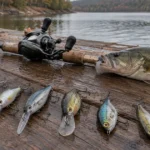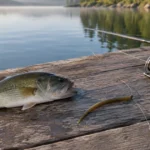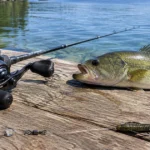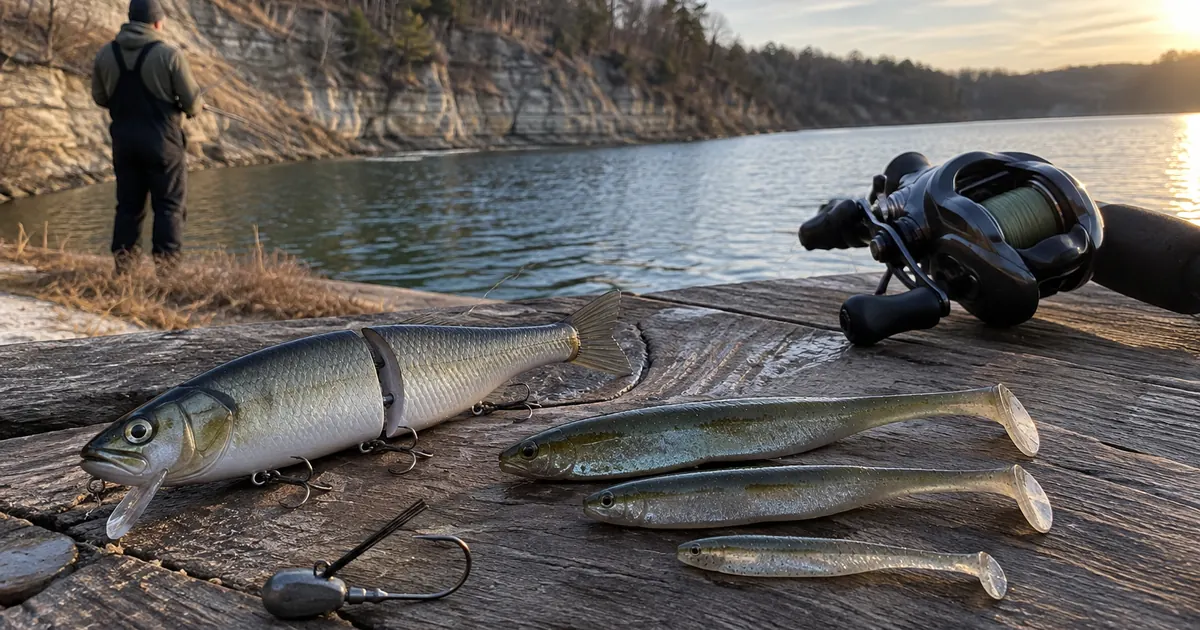
Swimbait fishing for bass starts with a choice most anglers skip: which of the five swimbait families you are actually throwing, because a 3-inch paddle-tail and a 10-inch multi-jointed bait are two different techniques that happen to share a name.
Get that right and the rest of the system follows — the hook, the rod, the line, and above all the retrieve speed, which on a swimbait is not a preference but a measurable setting.
Here is the complete breakdown, drawn from the lure encyclopedia and the trophy chapter of Bass Fishing Mastery.

Bass Fishing Mastery: the complete 86-page bass guide behind this article. See the guide →
The Five Swimbait Families
| Family | Size | What it does | Where it shines |
|---|---|---|---|
| Paddle-tail | 3 to 5 inches | The most versatile swimbait. Rigged on a weighted swimbait hook or a jig head | Everywhere, all season, as a searching and follow-up bait |
| Boot-tail | 4 to 6 inches | A wider, boot-shaped tail makes more vibration and a slower fall than a paddle-tail | Around grass, and whenever fish want a slower presentation |
| Hollow-body | 3 to 5 inches | Soft hollow construction, ultra-realistic action, often rigged so the hook sets on the outside | Clear water and pressured fish that inspect everything |
| Glide bait | 4 to 6 inches | A hard body that glides side to side on a sweep-and-pause retrieve | Clear water and winter, where the pause does the work |
| Multi-jointed hard swimbait | 6 to 12 inches and up | The trophy fish lure. Produces the largest bass in the lake | Trophy water, with specialized rods and very slow, deliberate retrieves |
Two things come out of that table. First, size is the real variable — the gap between a 3-inch paddle-tail and a 10-inch jointed bait is not a matter of degree. Second, the families split into two jobs: the smaller soft baits are a numbers and versatility play, while the glide and jointed baits are a deliberate, low-bite, high-average trade.
The Speed Check That Decides the Day
A swimbait only works when its tail works, and you can verify that in ten seconds before you ever make a cast.
Drop it in beside the boat, hold it just under the surface where you can see it clearly, and wind at the pace you intend to use out there. Now watch the tail:
- It should beat rhythmically. That is the target.
- If it does not beat at all, retrieve faster.
- If it spins instead of beating, retrieve slower.
Proper tail action is non-negotiable for a swimbait. On a paddle-tail you should feel the tail beating through the rod the entire retrieve — the moment that feeling disappears, the bait has stopped doing the one thing it exists to do.
Run the speed check again every time you change depth, weight or hook size. The right speed for a 4-inch bait on a 4/0 hook is not the right speed for the same bait on a 6/0.
Rigging It So It Swims Straight
Soft swimbaits ride on a weighted swimbait hook in the 4/0 to 7/0 range. The built-in keel weight is the whole point: it keeps the paddle tail upright and swimming correctly instead of rolling onto its side, which is the usual cause of a bait that spins. Hollow-body swimbaits are frequently rigged so the hook sits on the outside of the bait, which keeps the hook gap open on the set.
Match hook size to bait size, and check the bait is perfectly straight on the hook before you cast. A bend or a bow creates an unnatural spin that kills the action and reduces bites — the same rule that applies to a Texas-rigged worm applies here, and it matters more because a swimbait is judged on its swim.
Hard glide baits and jointed baits want a different connection. Tie them with a non-slip loop knot: the permanent loop lets the lure swing freely and dramatically improves action on swimbaits, jerkbaits and topwater. A snug knot cinched tight to a hard bait’s line tie strangles the glide. Both knots are covered in our page on bass fishing knots.
Rod, Line and Drag for Big Baits
Large swimbaits need tackle built for them.
- Rod: 7 feet 6 inches to 8 feet, heavy or extra-heavy power, moderate-fast action. The length loads up a heavy bait on the cast; the moderate-fast action keeps the hooks in on a long-range fight.
- Line: 17 to 25 lb fluorocarbon — the strength to handle big lures and big fish, with the invisibility fluorocarbon gives near the bait.
- Drag: 25 to 30 percent of the line’s rated breaking strength. Test it with a handheld scale clipped to the hook, rod at the fighting angle of about 45 degrees, and adjust until the drag slips at the target pressure.
- Hooks: a large single hook has to be sharp to find the bony roof of the mouth. Check it on your thumbnail — a point that slides instead of catching is a point that loses the fish of the trip.
Smaller paddle-tails and hollow bodies do not need that rod. They fish fine on standard baitcasting tackle, and a 3-inch bait on a jig head belongs on spinning gear.
The Seasons Swimbaits Own
Swimbaits are not a season-specific lure, but there are windows where they are clearly the best choice.
| Window | Water | Where and how |
|---|---|---|
| Pre-spawn, 50 to 58°F | Staging fish waking up | Big swimbaits where a channel edge in 15 to 20 feet runs past the mouth of a major spawning cove — the big-fish pattern |
| Pre-spawn, 58 to 65°F | Warming, first grass | Swimbait along grass edges, with lipless cranks and jigs |
| Spawn | 1 to 6 feet, visible fish | A small swimbait for sight fishing, alongside a finesse jig or Ned rig |
| Summer, noon to 5 PM | 15 to 25 feet | A big swimbait on ledges, humps and creek channel edges, with a football jig and deep crankbait |
| Summer nights | 1 to 6 feet | A swimbait worked along a grass edge, with dark topwater and a black jig |
| Mid-fall | Creek backs and shallow flats | Fast presentations win — swimbaits, spinnerbaits and lipless crankbaits as the shad migration peaks |
The pre-spawn line is the most valuable one on that chart. The heaviest females do not stage alongside the males in the shallowest water; they hold at the deep end of the staging range, out where a channel edge in 15 to 20 feet runs past a major spawning cove. A big swimbait and a football jig worked along that edge are the trophy window of the year. Fall is the volume window instead: by mid-fall the shad migration has pushed into the creek backs, and shallow flats there can hold enormous numbers of fish. The full lineup for that period is in the best fall bass lures.
One fall warning, though. The shad hatched this season run only 2 to 3 inches, and bass locked onto that profile will slap at a magnum bait without ever closing on it. When you get swipes and short strikes, do not change spots — change size. Downsizing to match juvenile bait turns half-hearted swipes into solid strikes. The same fix applies to short strikes generally: shorten the bait or step down a size.
Why Big Swimbaits Catch Big Bass
Large swimbaits in the 6 to 10 inch range are the number one trophy lure category, and the reason is simple: big bass key on big prey. On fisheries built for giants, big swimbait presentations and extreme patience are the standard approach.
That comes with a trade you have to accept up front. Trophy fishing often means one to three bites in a day with presentations that smaller fish ignore entirely. Patience and confidence in the presentation matter as much as the technique itself, and a jointed bait retrieved very slowly and deliberately is not a bait you can fish while doubting it.
Trophy bass also need the right address: abundant deep structure nearby, a serious forage base of large bluegill and shad, and water where fish are allowed to grow. More on that selection in how to catch big bass, and in what bass eat for matching the forage.
Clear water is the other natural home for the hard baits in this family. Glide baits are extremely effective in clear water and in winter, where the sweep-and-pause gives a cold fish the long look it needs. See the best bass lures for clear water for the rest of that box.
Real-World Scenario: the Fish That Follows and Turns Away
You are working a swimbait along a clear-water grass edge and a good bass tracks it all the way to the bank, then peels off at the last second. It happens twice more in the next hour.
The read: the fish are interested but unconvinced. That is almost always clear water, a presentation that is too slow, and too long a look at the bait.
The play uses two levers, in order. First, speed up — make the bait flee, because a predator decides fast about an escaping meal. Then add an erratic trigger: a rip, a sudden direction change, or a kill-and-restart. If the followers keep coming without committing, downsize and go natural. A following fish is a catchable fish, so change color or size and put the next cast back on the same spot rather than writing it off. Swimbait fishing for bass rewards exactly that kind of adjustment, one variable at a time.
Quick Answers
What size swimbait should I start with?
A 3 to 5 inch paddle-tail. It is the most versatile swimbait, it fishes on standard gear, and it covers more situations than any other size in the family.
How fast should I retrieve a swimbait?
Fast enough that the tail beats rhythmically. Check it in plain sight next to the boat at your intended pace: no beat means wind faster, and a bait that spins rather than beats means wind slower.
What hook do I use for a soft swimbait?
A weighted swimbait hook, 4/0 to 7/0, sized to the bait. The built-in keel weight keeps the paddle tail upright so the bait swims instead of rolling.
When are big swimbaits worth the fewer bites?
Pre-spawn, out where a channel edge in 15 to 20 feet runs past a spawning cove, and any time you are hunting a trophy: big bass key on big prey, so one to three bites a day is the normal trade in trophy-minded swimbait fishing for bass.
Tight lines,
— David