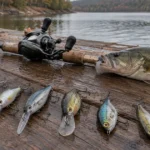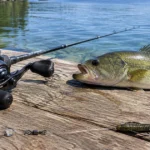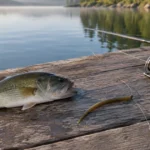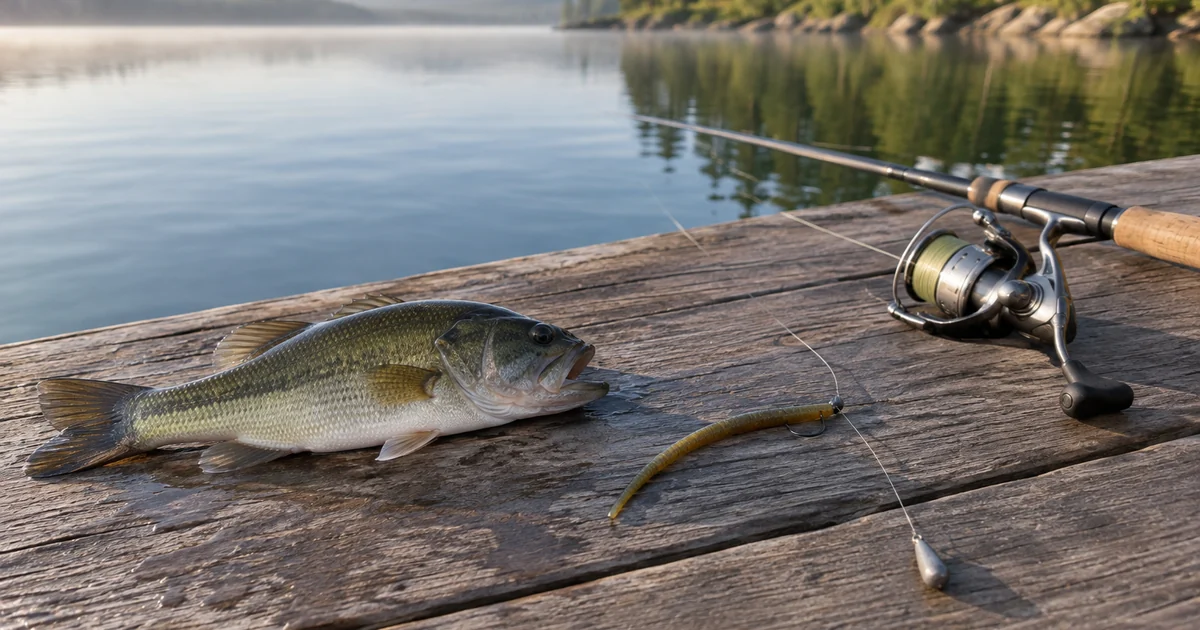
Drop shot fishing for bass exists to solve one problem: holding a bait at a chosen height off the bottom, minute after minute, without ever dragging it out of the strike zone. No other rig does that, and no other rig asks so little of the fish.
That is the whole argument for the rig. It is also why three settings decide whether it produces or just hangs in the water: the length of tag end below the hook, the weight you clip to that tag, and whether the hook truly stands at ninety degrees to your line.
This page takes the rig apart the way Bass Fishing Mastery teaches it — the mechanics first, then the tuning, then the exact water where a stationary bait beats everything else in the box.

Bass Fishing Mastery: the complete 86-page bass guide behind this article. See the guide →
Why a Motionless Bait Out-Fishes a Moving One
All finesse fishing trades ground covered for time spent. The bait stays where the fish is for as long as you can stand it, and travels as little as it can get away with. The drop shot is the purest expression of that bargain. The weight rests on the bottom, the line carries a slight angle, and a series of small wrist movements makes the bait tremble where it sits. The bait is active the entire time and still covers no ground.
That matters because a bass does not always have a large strike zone. After a sharp barometric rise, fish hug cover and shrink the area they are willing to cover for a meal. Clear, pressured water shuts fish down differently. On lakes where everything loud has already been shown to them, bass quit chasing anything that behaves like it is escaping. A bait suspended at eye level for a full minute asks a question they are not used to answering, and fish that have refused every other offer will take it while it is standing still.
Understand how the strike itself works and the patience makes even more sense. A bass does not bite in the conventional sense — it expands its mouth and gill covers to create a vacuum that pulls prey in. On a drop shot, that suction often happens while the bait is doing nothing at all, which is why the hookset here is its own motion: reel down until the rod loads against the fish, then sweep it upward. A reflex jerk at the first tick pulls the hook out before the bass has it.
The Three Numbers You Actually Tune
Everything adjustable on a drop shot falls into three settings. Each one changes a different thing.
| Setting | Where to start | What it controls |
|---|---|---|
| Tag end below the hook | 18 to 24 inches | How far the bait rides off the bottom — set it to the level the fish are using |
| Weight on the tag | 3/16 oz shallow, 1/4 to 3/8 oz deeper | Bottom contact and fall speed. Use the lightest weight that stays in touch |
| Hook | Drop shot pattern in a 1 or a 2, fine wire | Sensitivity and penetration. Pinned through the nose tip alone, so the body hangs level |
The tag length is the setting most anglers never revisit after rigging. It is worth changing on the water: fish pinned to the bottom want a short tag, fish suspended a foot or two off a rock pile want a long one.
Weight discipline matters just as much. Reach for the lightest piece of tungsten still able to hold the bottom: it falls most naturally and it draws the most bites. Depth, wind and current are the only three reasons to go heavier. Overweighting calm shallow water is the quiet reason a good spot feels dead.
Once the weight lands, reel until the line carries a slight angle, then work it with the wrist alone. If the weight travels, you are dragging the rig instead of shaking the bait.
Hook Angle: the Pass-Back Nobody Checks
The rig lives or dies on one step. Tie the hook on with a Palomar, leave 18 to 24 inches of tag below it, then thread that tag back into the eye of the hook, entering from the front. That single pass tilts the hook out to ninety degrees, point riding upward, instead of letting it lie along the line, and without it penetration is compromised. A hook lying flat along the line collects bites and converts almost none of them.
Use the Palomar here and nothing else. It tests at close to full line strength, it handles every line type, and it is the knot finesse rigs are built on. Wet it thoroughly before you cinch it down.
Two bench jobs belong with that knot, because a fine wire hook has to pierce a bony mouth roof and a thin leader has to survive the fight: file the point until it bites, and back the reel off so it gives line before anything breaks — both checks are measured rather than guessed in our guide to essential bass fishing knots.
Matching the Rig to the Water
The standard rig is one of five. Each variation solves a specific problem, and the adjustment is usually small.
| Water you are facing | Rig adjustment | Why it works |
|---|---|---|
| Clear water, bottom-oriented fish | Standard: hook at 90 degrees on an 18 to 24 inch tag, plastic nose-hooked, shaken on the bottom | Covers more situations than the other four put together |
| Fish holding just off the bottom | Floating: swap in a buoyant ElaZtech body | The material lifts the bait by itself, so it hovers and breathes with no help from the rod |
| 30 to 50 feet and deeper | Deep: heavier weight, shorter tag, braid overhead | Keeps the feel at a depth where everything else goes numb |
| Rivers and current | Current: set up upstream of the spot, add weight, let the flow carry the rig down into it | Food arrives on the current, so the bait should too |
| Big largemouth, heavier cover | Largemouth: a 1/0 or 2/0 hook, a worm or swimbait body in the 5 to 6 inch range, 1/4 to 3/8 oz of weight, baitcasting gear | A bigger profile for fish that are not finesse-minded |
The current version deserves a note of its own. River bass face upstream, so the rig has to arrive the way a meal arrives: cast well above the target and let the flow walk the bait down into the zone, managing slack the whole way instead of pinning the rig in one place.
The Spinning System Behind the Rig
A drop shot is a spinning-rod technique, and the specs are tight.
- Rod: 6 feet 10 inches to 7 feet 2 inches, medium-light power, fast action. Light enough to shake the bait, fast enough to feel the bottom through the weight.
- Reel: a 2000 to 2500 size, the finesse range built for 6 to 12 lb line.
- Line: 8 to 12 lb fluorocarbon. Its refractive index sits close to water, so it all but disappears, and it carries enough feel to read a slack-line pickup.
- Deep water: braid in 30 lb up top, a 10 lb fluorocarbon leader at the business end — zero-stretch feel all the way down, with the invisible section where it counts. Join the two with an Alberto knot.
Fine wire hooks and light line mean the drag does real work on this rig. A locked drag and a size 1 hook are a bad combination on a four-pound fish.
Where the Drop Shot Earns Its Keep
Three species, one rig, and the spotted bass is its best customer. Spots carry a far stronger schooling tendency than largemouth, hold deep on clear highland reservoirs, and are listed in the guide as outright drop shot and finesse specialists. On the clearest of those reservoirs, finesse presentations dominate the fishery year-round.
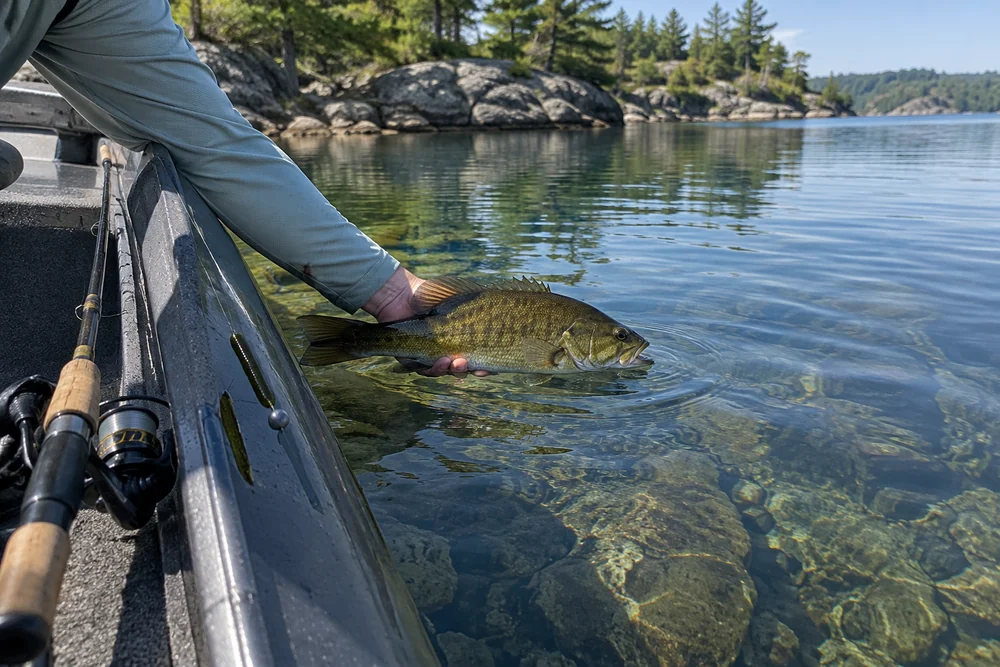
Smallmouth are nearly as committed. On the Great Lakes and their connecting rivers, the fall drop shot and tube pattern is legendary, and in moving water like the big connecting rivers it is a primary technique for fish in current seams. Our page on catching smallmouth bass covers the rest of that system.
Then there are the conditions that hand the rig the day:
- Winter. On deep structure, a drop shot with a finesse worm is one of the few things a cold bass will commit to, worked impossibly slow in the noon-to-4 PM window. See the winter bass fishing guide for finding the school first.
- After a cold front. Halve the pace, drop one size, and put the bait right against the thickest cover you can reach. Full detail in post-cold-front bass fishing.
- River pools. Drop shot near deep pool structure is one of the standard river presentations, alongside tubes and Ned rigs.
- Pressured lakes. Fish the same areas as everybody else with smaller, quieter presentations. The easy fish are already caught.
If finesse is new to you, the Ned rig is the other half of this toolkit and covers shallower, more mobile water.
Real-World Scenario: the Bass You Can See
Real-world scenario from the situational playbook in the guide. Calm, clear water, and a good bass parked in plain view, close enough to see the whole fish. It will not eat. The read is uncomfortable: a fish that visible in flat water has almost certainly watched you arrive, and the staring contest was decided before you picked up a rod.
The play is to walk away from it. Note where it sits, leave it alone for twenty minutes, then come back with a plan rather than another cast. Stay well back from it. Keep your outline low. Work with the sun in your face instead of behind you. Then take one shot: a single cast that drops far enough clear of the fish to spook nothing, and a small natural bait swum past it on an angle.
A drop shot fits that brief better than almost anything in the boat. A nose-hooked finesse worm on a long tag end, shaken a few inches off the bottom, is the quietest way to park a small profile in front of a fish that is already suspicious of you. You get one presentation out of it. If the bass ignores it, leave a second time — visible fish come back to life once the pressure is off them, and you can try again later in the day.
Quick Answers
How long should the tag end be on a drop shot?
Start at 18 to 24 inches below the hook. That measurement decides how far the bait rides off the bottom, so shorten it for fish pinned down and lengthen it for fish sitting above it.
What size hook is right for a drop shot?
A drop shot pattern in a 1 or a 2 — small, fine wire, pinned through the nose tip only. Tie it with a Palomar, then thread the tag back into the eye from the front so the hook sits out at 90 degrees.
What line should I use for a drop shot?
8 to 12 lb fluorocarbon on a 2000 to 2500 spinning reel. Past 30 feet, switch the main line to 30 lb braid and run a fluorocarbon leader of 10 lb so you keep the feel that deep.
Does the drop shot work for largemouth?
Yes, with the largemouth version: a 1/0 or 2/0 hook, a worm or swimbait body in the 5 to 6 inch range, a 1/4 to 3/8 oz weight, and baitcasting gear. Drop shot fishing for bass is not only a smallmouth and spotted bass game.
Tight lines,
— David