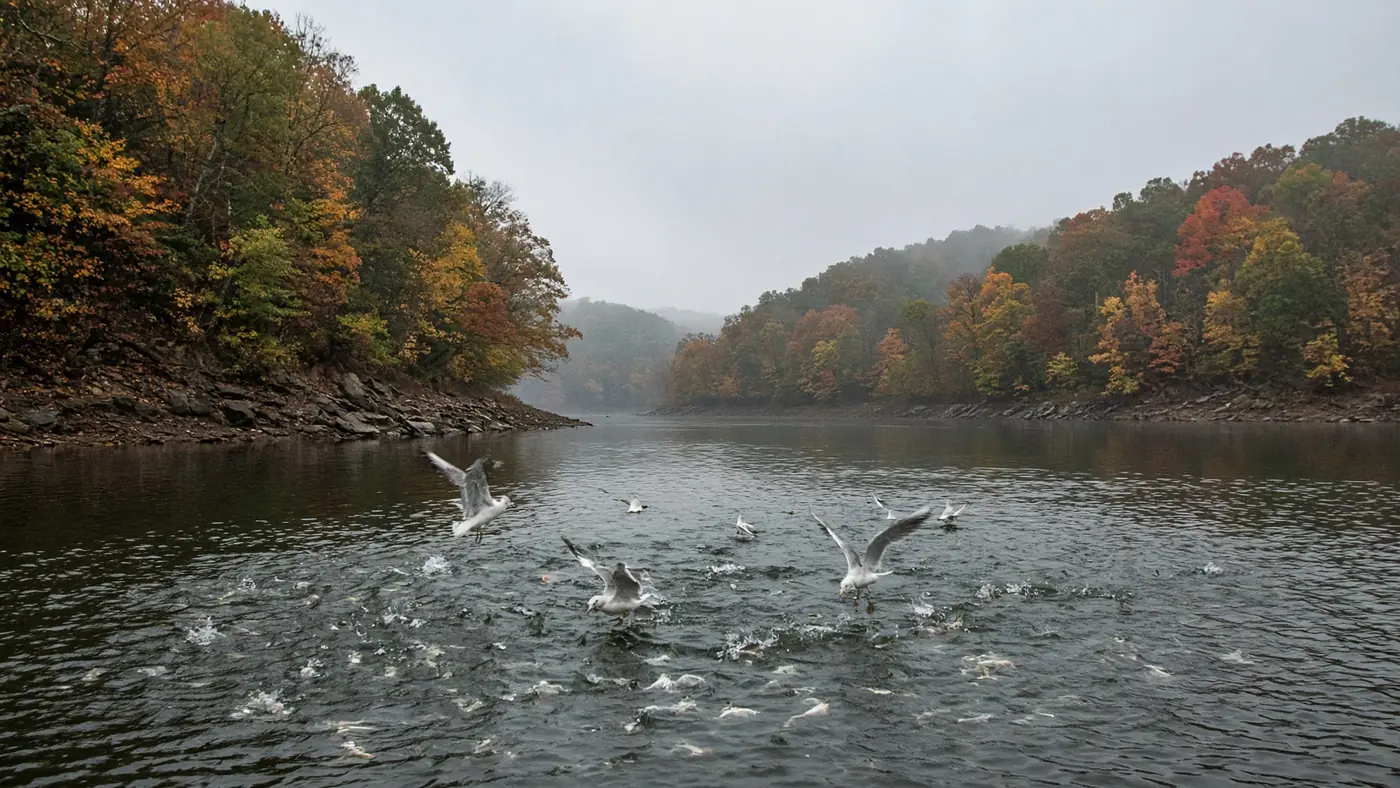
If there’s one place to be on a reservoir in the fall, it’s a creek arm. Every fall, shad and other baitfish leave the main lake, school up and push into the creeks, and bass follow them with single-minded intensity. Find where the bait is in that migration and you’ve found the fish.
The trick is that the migration moves. The spot that was loaded two weeks ago can be empty today. Here’s how to follow it from the mouth to the back, with the seasonal system from Bass Fishing Mastery.

Bass Fishing Mastery: the complete 86-page bass guide behind this article. See the guide →
The Migration in Three Stages
| Stage | Where the shad are | Where to fish | Lures |
|---|---|---|---|
| Early fall | Moving from the main lake into the creek arms | Creek arm mouths and the points at the entrance | Lipless crankbaits, swim jigs, medium crankbaits in shad colors |
| Mid-fall | Full migration into the creek backs | Back-of-creek shallow flats, which can hold enormous numbers of fish | Spinnerbaits, swimbaits, lipless crankbaits |
| Late fall (below 58°F) | Thinning out as the water cools | The first deeper water and channel edges | Jigs, Texas rigs, medium-diving crankbaits |
Stage follows water temperature, not the calendar. If you’re not sure where your lake is, start with when fall bass fishing really starts.
Stage 1: The Creek Mouth
In early fall, the shad are transitioning from the main lake into the creeks. The mouth of the creek arm and its points are the funnel they pass through, and bass wait there.
- Fish the points at the entrance. Points are the most consistent bass locations in any lake, and in early fall the ones at the creek mouths are the busiest.
- Cover water. Lipless crankbaits, swim jigs and medium-diving crankbaits in shad colors let you search fast until you find the fish.
- Position your boat off the tip, cast up the point shallower than you expect fish, then work progressively deeper.
Stage 2: The Creek Back
By mid-fall, the migration reaches the back of the creek. The shallow flats there, especially flats next to the creek channel, can hold enormous numbers of bass. This is the heart of the fall feed, and fast presentations win: spinnerbaits, swimbaits and lipless crankbaits.
The old creek channel matters here. It’s the highway bass use to travel between shallow feeding areas and deeper water, like cars following a road. Flats that sit right next to the channel get the traffic.
How to Find the Bait
The bait is the whole game, so learn to spot it:
- Birds: terns, gulls and great blue herons locate baitfish before you do. Diving birds are free scouts.
- Surface activity: nervous water, flickering shad and splashes. Baitfish jump away from the predator, so if they’re all jumping one way, the bass are coming from the opposite direction.
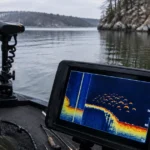
- Your sonar: baitfish show up as clouds or clusters. Compact, moving clouds are being pushed by predators. Bait scattering in all directions means bass are attacking the school right now.
- Bait near the surface in the morning and evening means bass are just below it. Target the depth of the bass, not the bait.
When you see bass actively chasing bait, get in position quickly and fish aggressively. These feeding windows are short and intense.
Stage 3: When It Cools Below 58°F
When the water drops below 58°F, the pattern changes abruptly. Swap the speed lures for jigs, Texas rigs and medium-diving crankbaits, and fish the first deeper water and channel edges near the flats. Bites get less aggressive, but quality improves.
Below 52 to 55°F, the fall shad pattern ends and bass move toward deeper, stable structure for winter.
Three Mistakes That Cost Fall Fish
- Fishing last week’s spot. The migration moves. A spot that was loaded two weeks ago may be empty today. Follow the bait, not your memory.
- Throwing baits that are too big. This year’s shad are 2 to 3 inches. If you get swipes and short strikes, downsize before you change spots.
- Ignoring the wind. Wind pushes bait onto the bank it hits. In a creek arm, the wind-blown side usually holds the active fish.
The full lure lineup, with sizes, colors and spinnerbait blades, is in the best fall bass lures. And when the fish are blowing up on bait but won’t touch your lure, see how to catch schooling bass.
Quick Answers
Where do bass go in the fall?
They follow the shad into the creek arms: first to the creek mouths and points, then to the shallow flats in the backs of the creeks.
How do I find fall bass fast?
Find the bait. Watch for diving birds and surface activity, and look for baitfish clouds on your sonar. Any area holding visible baitfish is a target.
What depth are bass in the fall?
Often shallow, on the flats in the backs of creek arms and around the points where shad pass. They move deeper once the water drops below 58°F.
Tight lines,
— David