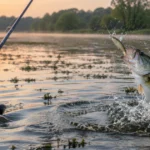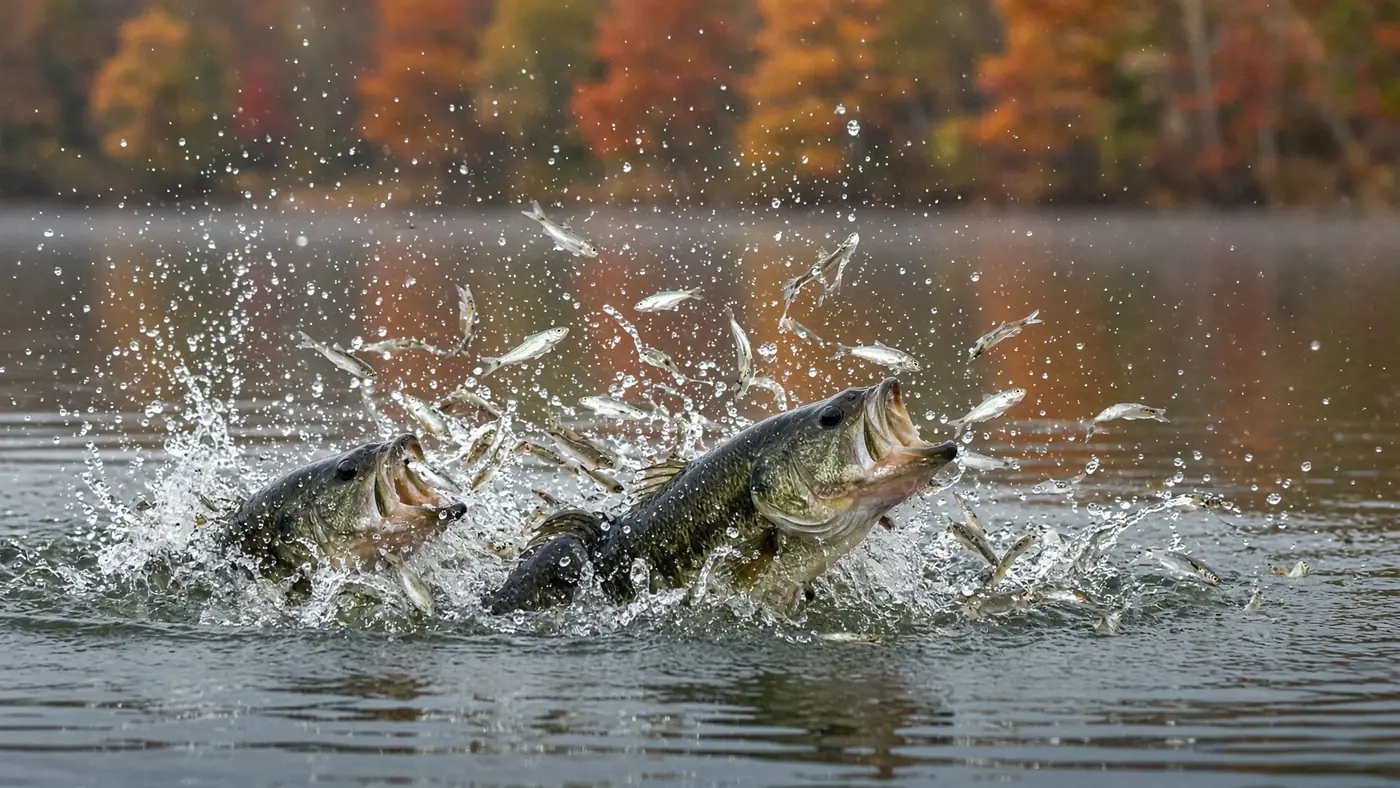
It’s one of the most frustrating moments in bass fishing. Shad are spraying out of the water, bass are crashing the surface all around the boat, and every cast you make comes back untouched. In the fall, when bass school up on shad, it happens constantly.
The good news: it’s not bad luck, and it has a precise fix. Here’s the read and the play, straight from the situational playbook in Bass Fishing Mastery.
Bass Fishing Mastery: the complete 86-page bass guide behind this article. See the guide →
Why Schooling Bass Ignore Your Lure
Schooling bass are locked onto one size of bait. And that size is almost always smaller than what you’re throwing.
In the fall, this year’s shad are only 2 to 3 inches long. Bass feeding on them will swipe at a bigger bait without committing, or ignore it completely. It isn’t your color and it isn’t your retrieve. It’s the size.
The Fix, Step by Step
1. Downsize Radically and Match the Profile
Switch to a small lure that looks like what they’re eating:
- A small topwater
- A fluke
- A tail-weighted minnow
Think 2 to 3 inches, in a shad color: chrome and blue, white and silver, or pearl.
2. Cast Past the School, Not Into It
Never drop your lure into the middle of the boil. Cast past the school and bring your bait through it, the way a stray shad would swim. Food doesn’t fall out of the sky onto a predator’s head.
3. Then Work the Edges
After a pass through the school, work its rim. The biggest fish patrol the edges, picking off the wounded and confused bait that falls away from the main school.
4. Try Below the Frenzy
If the surface bite still won’t work, go under it. The largest bass often sit just below the surface chaos, so a lure that sinks below the feeding frenzy can catch the fish that matter.
5. Move Fast
Speed matters: blitzes close quickly. When you see bass chasing bait, get into position fast and fish aggressively. Keep a second rod rigged with your small bait so you’re ready the second the school comes up.
How to Find the Schools
- Watch the birds. Terns, gulls and great blue herons find baitfish before you do. Diving birds are free scouts.
- Read the splashes. Baitfish jump away from the predator. If shad are all jumping in one direction, the bass are coming from the other side.
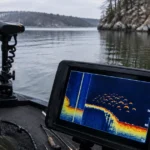
- Watch your sonar. Bait scattering in all directions means bass are attacking the school right now. Compact, moving bait clouds are being pushed by predators.
- Follow the bait into the creeks. In the fall, shad migrate into the creek arms and the schools follow. See fall bass in creek arms.
The Shad Kill: When to Stay All Day
During rapid fall cold fronts, threadfin shad can die in large numbers. Dying shad draw feeding bass to the surface in big, chaotic schools, some of the most exciting fishing of the year.
If you find dying bait flickering on the surface, stay all day. The easiest feeding frenzy of the year has a short calendar. Fish shad profiles in white, silver or chrome.
When They Swipe but Don’t Eat
Short strikes are the same message in a different form. If fish are slapping your lure without getting hooked:
- Don’t change spots. Change size. Downsize to match the juvenile shad.
- Shorten the lure, or add a trailer hook to your spinnerbait for the fish that nip at the back of the skirt.
- Check your hooks. A dull hook turns bites into misses.
For the full list of fall baits by stage, see the best fall bass lures. Not sure the fall bite has started on your lake? Check when fall bass fishing starts.
Quick Answers
Why won’t bass bite when they’re busting on the surface?
They’re locked onto small baitfish, usually 2 to 3 inch shad in the fall, and your lure is too big. Downsize and match the profile.
What lure is best for schooling bass?
A small topwater, a fluke or a tail-weighted minnow, about the size of the local shad, in chrome, white, silver or pearl.
Where should I cast to a school of bass?
Past the school, then bring the lure through it. After that, work the edges, where the biggest fish pick off stray bait.
Tight lines,
— David