Most beginning bass anglers quit within two years. Not because they don’t enjoy it, and not because the fish aren’t there. They quit because nobody gave them a complete, honest foundation, only scattered tips, videos out of context and advice written to sell tackle.
This guide is the foundation. It covers what to buy (and what to skip), the one rig to learn first, where largemouth hide, when to go, and a simple plan for your first ten trips. Everything comes from the beginner path in Bass Fishing Mastery.
Bass Fishing Mastery: the complete 86-page bass guide behind this article. See the guide →
Know Your Fish
There are three bass species you’ll hear about in the US:
| Species | Where it lives | What to know |
|---|---|---|
| Largemouth | Warm, weedy, still or slow water: ponds, lakes, reservoirs | The most widespread and the largest. A pure ambush predator that eats almost anything. |
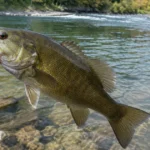
| Smallmouth | Clear, cool, rocky water: highland rivers, streams, clear reservoirs | Pound for pound the strongest fighter, more selective, a crawfish specialist |
| Spotted bass | Clear highland reservoirs, fast rocky rivers | Similar to largemouth but schools much more, often deep |
Start with largemouth. They live almost everywhere, including the pond down the road.
Three facts about how a largemouth works will change how you fish:
- It hunts by ambush. It waits next to cover and strikes what passes. Your lure has to come by its hiding spot, not through open water in the middle of nowhere.
- It feels before it sees. The lateral line along its body detects vibration, which is why blades and rattles call fish from beyond their visual range.
- It sees best in low light. Dawn, dusk and overcast days are its most confident feeding windows.
The Starter Kit (Under $250)
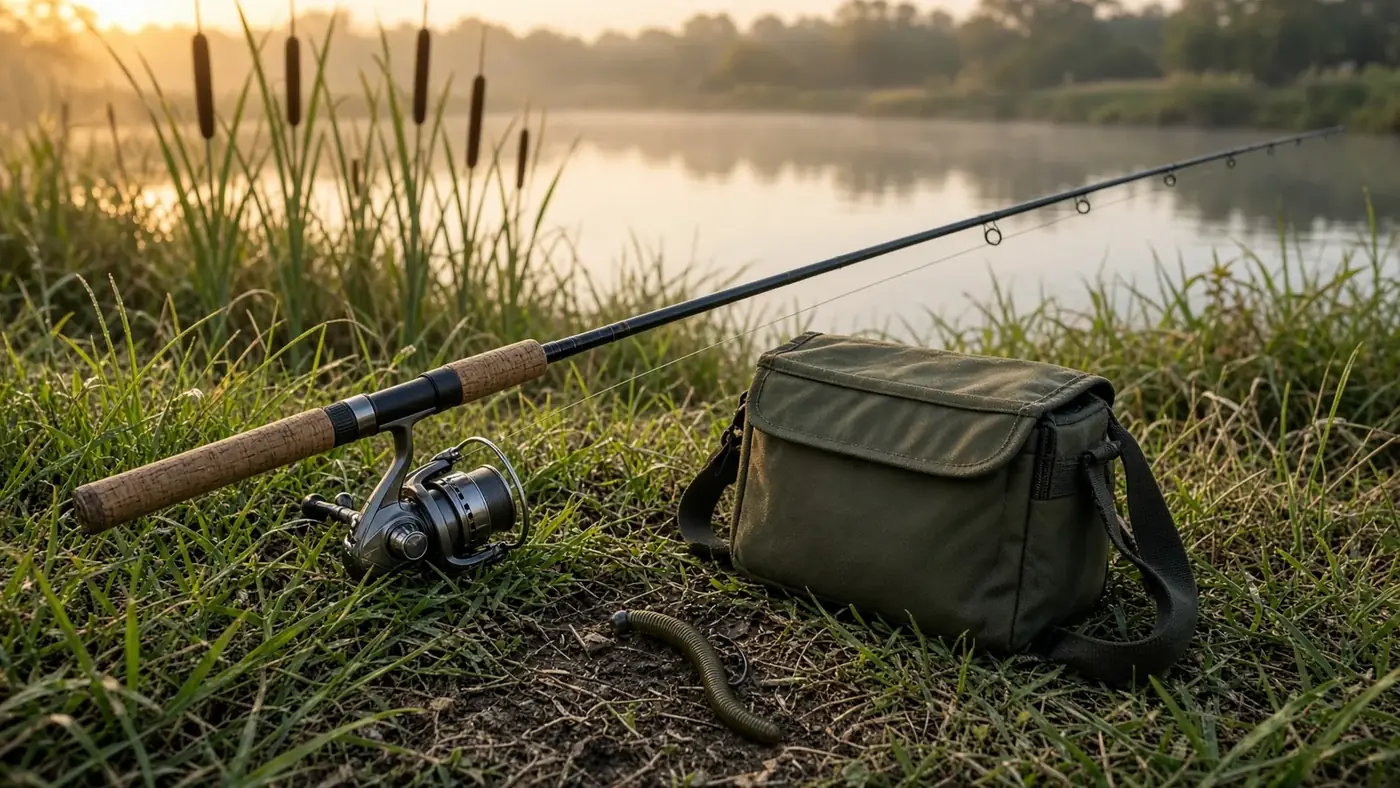
You don’t need a boat or a garage full of tackle. This is the starter setup from the guide’s gear chapter:
| Item | Pick | Approx. price |
|---|---|---|
| Rod | Ugly Stik GX2, 7’ medium | $40 to $50 |
| Reel | Pflueger President 30 spinning | $55 to $65 |
| Line | Stren Original 12 lb monofilament | $8 |
| Soft plastics | Z-Man TRD (Ned rig), Zoom Trick Worm, Keitech swimbait | about $25 |
| Hard baits | Chrome/blue lipless crankbait, chartreuse spinnerbait, square bill | about $35 |
| Hooks and weights | Offset worm hook assortment, tungsten bullet weights | about $20 |
| Accessories | Pliers, polarized glasses, hook sharpener, bobber stoppers | about $25 |
Why a spinning reel? No backlash, it handles light line and light lures beautifully, and it stays useful even when you’re an expert. Why monofilament? It stretches to absorb shock, it floats for topwater, and it’s the easiest line to handle.
Don’t skip the polarized glasses. They cut surface glare so you can see into the water, spot fish and find cover. They’re your electronics until you own some.
Learn One Rig First: The Texas Rig
The plastic worm has caught more bass than any other lure in history, and the Texas rig is how you fish it without snagging.
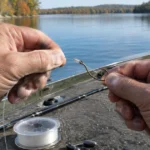
- Slide a bullet weight onto the line, point first. 3/16 oz for shallow calm water, 3/8 oz for moderate depth or a little wind.
- Tie on a 3/0 offset hook for a 6 to 7 inch worm, with an improved clinch or Palomar knot.
- Push the hook point about 1/4 inch into the head of the worm and out the side.
- Slide the worm up to the hook eye, turn the hook around, and push the point back into the body so it sits just under the surface of the plastic. It’s now weedless.
- Check that the worm hangs straight. A twisted worm spins and looks wrong.
How to fish it: cast past your target and watch the line as the worm sinks; a lot of bites come on the fall. On the bottom, lift the rod from 9 to 11 o’clock to drag it slowly, reel up the slack, pause 2 to 4 seconds, and repeat.
The mistake everyone makes: setting the hook at the first tap. A bass often picks up the worm and swims with it before swallowing it. When something feels different, reel down to take out the slack, feel the weight, then sweep the rod up hard.
Green pumpkin, watermelon red and black are the universal starting colors.
Where Largemouth Hide
The most important skill in bass fishing isn’t technique, it’s location. An average angler on the right spot outfishes an expert on the wrong one.
Learn two words:
- Cover: physical objects in the water, like rocks, fallen trees, grass, docks and stumps. Bass use cover to ambush and to hide.
- Structure: the shape of the bottom, like points, drop-offs, humps and channel edges.
The best spots are where the two meet: a rock pile on the end of an underwater point, a fallen tree on a drop-off. Some beginner-friendly targets:
- Fallen trees: work the deepest, most complex part of the tree first. That’s where the biggest fish sits.
- Grass edges: bass sit on the line where the grass ends and open water begins.
- Docks, especially the shaded side on bright days.
- Points: fingers of land that run out into the lake.
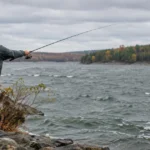
- The wind-blown bank: wind pushes food onto it all day. The calm bank behind you is a waiting room.
No boat? No problem. Bank anglers have two advantages: stealth, and the strip of water right along the shore that boats can’t fish well. Farm ponds, city and county park ponds and reservoir shorelines are all great places to learn. On a new pond, spend the first 20 minutes walking the bank with polarized glasses before you cast.
When to Go
- Time of day: early morning and the last hour before dark. Dawn and dusk are prime.
- Weather: overcast days are excellent all day, and light rain is too. The 12 to 36 hours before a storm front arrives is often the best fishing of the week.
- The hardest day: right after a cold front, with a bluebird sky and rising pressure. Slow down, use smaller lures and expect fewer bites.
- Season: bass change their behavior with water temperature. The bass water temperature chart shows what to do at each temperature, and the best bass lures for summer covers the hot months.
Never fish in a thunderstorm. Lightning and open water are a deadly combination. Get off the water, no exceptions.
Your First 10 Trips
This is the plan that takes you from beginner to pattern-finding angler in one season:
- Trips 1 and 2: the Texas rig only. One worm color, one weight, one hook size. Cast it next to every piece of cover you can find. The goal isn’t fish; it’s learning to feel the bottom and recognize a bite.
- Trips 3 and 4: add a spinnerbait. Start each trip with 20 minutes of steady spinnerbait retrieves along cover, then switch to the Texas rig. Notice where each one gets bit.
- Trips 5 and 6: add topwater at dawn. Fish a walk-the-dog topwater only for the first 45 minutes of light, then the spinnerbait, then the Texas rig.
- Trips 7 and 8: read the water first. Spend 15 minutes walking or idling with polarized glasses and sketch a simple map of the cover. Rank the spots, then fish them.
- Trips 9 and 10: find a pattern. When two fish come from the same kind of cover at the same depth, stop exploring and fish every similar spot. On trip 10, go back and see if the pattern held.
Five Beginner Mistakes to Skip
- Casting at the fish. Land your lure 6 to 10 feet beyond the target and bring it past. Food doesn’t fall out of the sky onto a bass’s head.
- Leaving before the last 30 minutes of light. It’s a scheduled feeding window.
- Camping on one spot all day. Give each spot your best 3 to 5 casts, then move.
- Ignoring the wind-blown bank. Casting into the wind is annoying; catching fish isn’t.
- Neglecting the free stuff. Check that your hook catches on your thumbnail, wet every knot before you tighten it, and set your drag to about 25 to 30% of your line’s strength.
Handle Your First Bass Right
- Wet your hands before you touch the fish. Dry hands strip the slime coat that protects it.
- Under 3 to 4 pounds: grip the lower jaw, thumb inside the mouth.
- Bigger fish: lip grip plus your other hand under the belly. Never let a big bass hang vertically from its jaw.
- Keep it quick: in warm water, keep the fish out of the water less than 30 seconds.
- Release: hold it upright in the water, move it gently forward and back, and let go when it kicks away on its own.
Get Your License
A fishing license is required in every US state. An annual resident license usually costs $15 to $40, sold on your state fish and wildlife agency’s website, at big-box stores and at tackle shops. Read your state’s regulations for size limits (often a 12 to 14 inch minimum for largemouth) and daily limits (typically 5 bass).
Quick Answers
What is the best bait for beginner bass fishing?
A Texas-rigged plastic worm in green pumpkin, watermelon red or black. It works everywhere, all year, and it teaches you to feel the bottom and detect bites.
What time of day is best for largemouth bass?
The first and last hours of daylight. Overcast days can be good all day.
Do I need a boat to catch bass?
No. Everything in this guide works from the bank, and bank anglers have advantages boats don’t: stealth, and direct access to the shallow water right along the shore.
What pound line should a beginner use for bass?
12 lb monofilament on a spinning reel. It’s forgiving, affordable and easy to handle.
Tight lines,
— David