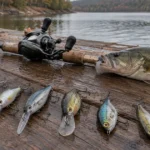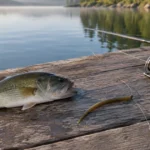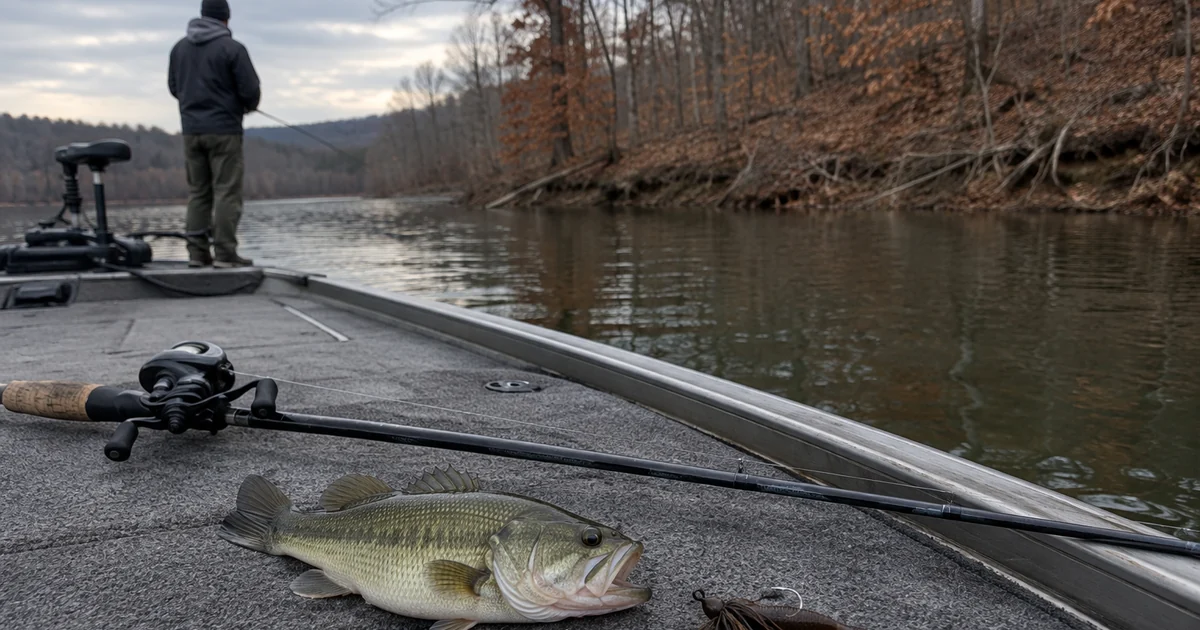
November bass fishing comes down to one move: as the water cools from the low 60s toward 50°F, bass leave the shallow fall flats and slide back to the first deeper water, channel edges and points close by. Find that first drop next to where the shad spent October, and you’ve found most of the fish in the lake.
It’s also the month where the calendar lies the most. A reservoir can sit at 61°F on the first weekend and 52°F three weeks later, and those are two different fisheries. The 12-month chart in Bass Fishing Mastery puts typical November water between 50°F and 62°F, with bass “transitioning deeper,” and its bait list for the month is short: jig, Texas rig, medium diver.
Here’s where they move, how to fish those spots, and which hours and weather pay off.
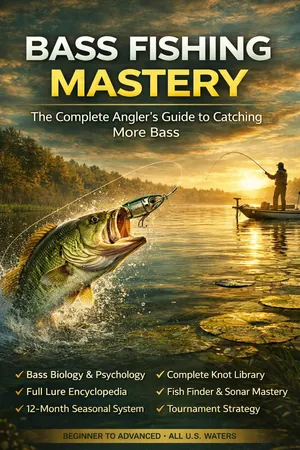
Bass Fishing Mastery: the complete 86-page bass guide behind this article. See the guide →
Read the Thermometer First: November in Four Stages
Bass don’t check the date. Check the water temperature every trip, with a cheap thermometer or your sonar’s readout: that number tells you which version of November you’re fishing, and every number below comes from the book’s seasonal system.
| Water temperature | What bass are doing | Where to look | What to tie on |
|---|---|---|---|
| 58°F to 62°F | Late fall feed, still tracking shad | Back-of-creek flats, especially those beside the creek channel | Spinnerbait, swimbait, lipless crankbait in shad colors |
| Just under 58°F | The cold-snap switch: fewer bites, bigger fish | Channel edges and the first drop beside those flats | Jig, Texas rig, medium-diving crankbait |
| 52°F to 55°F | The shad pattern shuts off abruptly | Deeper, stable structure: channel bends, points with depth nearby | Jig, Texas rig, flat-sided crankbait, jerkbait with 3 to 5 second pauses |
| Near 50°F | Fish settling toward winter spots | Deep points and channel bends | Slow jig and Texas rig; winter tools on the coldest days |
If your water still reads in the 70s or 80s in early November, you’re not late. Fall rolls south one lake at a time, at the pace of cool nights, so run the program your thermometer calls for. When fall bass fishing really starts shows how to tell where your lake sits.
Where Bass Go in November
The book’s month-by-month cycle describes fall as bass following shad into the creek arms and onto the shallow flats beside the old creek channels. November is the reverse trip. The fish don’t teleport to 30 feet. They back out along the same routes they used to come in.
Follow the creek channel out
Old creek channels are the travel lanes of a reservoir. Bass use them to move between shallow feeding areas and deeper holding water, the way traffic sticks to a road. So start where the flats you fished in October meet the channel, then work outward. The outside bends, where the original stream cut deepest, deserve extra time.
Secondary points in the creek arms
Points hold bass more reliably than any other feature in a lake, and in November the secondary points inside the creek arms come into their own. They sit right on the migration route between the creek backs and deeper water, and they tend to hold fish that see fewer lures than the famous main-lake points. Best of all is a point with cover on it that falls into a creek channel: structure, cover and a travel lane in one spot.
Wood with deep water close by
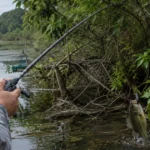
Laydowns, stumps and brush near the channel become more valuable as the water chills. In winter, bass hold tight against wood where the bottom stays marginally warmer, and late November starts to look like that. Start every laydown at the root ball. That tangle sits in the deepest water the tree offers, and the biggest bass on it tends to claim it.
Use your sonar on the bait
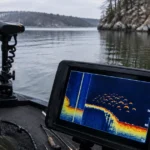
The shad are still the clock. Baitfish clouds near structure mean bass are almost certainly close. A tight cloud on the move is bait under pressure from predators. A school breaking apart all over the screen means the attack is happening as you watch. When bass sit below the bait, fish their depth, not the depth of the shad.
Fishing from shore? Good news: in the bank angler’s calendar, September through November is the payday stretch, with bait close to shore and the summer boat traffic gone. Points you can walk to, creek mouths and riprap all stay in play.
How to Fish November Spots
November fish are still eating, but they’re less willing to chase. The fixes are about angle, speed and contact.
Points: start shallow, finish deep
Set the boat out in deep water, off the end of the point. Your first casts land high on the point, in water thinner than seems reasonable, and each retrieve after that walks the bait a little further down the slope. That one approach covers the whole depth range in a few casts, which is exactly what you need when the fish could be at 6 feet in the morning and 12 by afternoon.
Channel edges: cast in, pull up
Run the trolling motor slowly along the channel edge, perpendicular to it. Cast down into the channel and bring the lure back up over the lip. Bass sitting on the edge see it climbing toward them, and you keep it in contact with the break.
Slow down, then slow down again
Cold bass need more time to commit. The book’s rule of thumb: cut your retrieve by 30%, then by another 30%. With a medium-diving crankbait, the bait should tick bottom or cover with each cast; if it never touches anything, it’s running too shallow. Keep the rod low and to the side to run the bait deeper and get a better hook angle.
Rig the jig and Texas rig for cold water
- Jig trailer: in cold water or for finicky fish, use a small craw trailer around 3 inches for a slower, subtler fall. Keep the trailer in proportion to the jig head.
- Texas rig weight: 3/8 oz handles moderate depth or a light wind; go to 1/2 to 3/4 oz for deeper water, heavy cover or a strong breeze. Leave the weight free-sliding in open water so the bait separates and flutters more naturally on the drop.
- Watch the fall: a meaningful share of bites come as the rig sinks. A line that jumps or swims sideways is a fish.
Turn the first fish into a pattern
When you catch one, write down the depth, the cover, the lure and the retrieve. Then run every other spot on the lake that matches that recipe. In a month when fish keep sliding, a whole group of bass usually relocates together. If a spot goes quiet, think about where the group would logically head next, and the answer is typically the next deeper stretch of that same channel.
Best Bass Lures for November, in Brief
The full fall lineup, with blade choices and rod and line charts, is in the best fall bass lures. For November specifically, the book’s 12-month chart narrows the box to three main baits, plus two cold-water specialists:
- Jig: the bait for the first drop and the channel edges.
- Texas rig: for cover near deeper water, worked slowly along the bottom.
- Medium diver (6 to 12 ft): built for points, mid-depth humps, channel edges and fall transition depths.
- Flat-sided crankbait: a tight, subtle wobble that looks more natural in 50°F to 60°F water and to pressured fish.
- Suspending jerkbait: in 50°F to 60°F water, pause 3 to 5 seconds; once the water falls under 50°F, stretch it to 8 to 12 seconds.
Early in the month, while shad are still on the flats, keep a spinnerbait or lipless crankbait rigged. A Colorado blade gives the most thump and is the book’s pick for slow-rolling in cooling water. Colors stay in the shad family: chrome and blue, white and silver, pearl. And size to the bait you see; the young-of-year shad run just 2 to 3 inches.
When to Fish: Hours and Weather in November
The weather calendar beats the clock
November is front season, and the barometer runs the bite more than the hour does.
- Before a front: falling pressure as a system approaches often produces the best fishing of the week. The book puts peak aggression in the 12 to 36 hours before a major low arrives. Fish fast and cover water.
- The first real cold snap: when the water loses 5 degrees or more, the following day or two can deliver the top bite of the year.
- After the front: rising pressure and a bluebird sky push bass deep and tight. Slow down by half, downsize by one size, and put the bait right on the best cover.
- Overcast days: cloud cover lets bass roam at every depth, so a moving bait stays in play from launch to dark.
- Wind: light to moderate wind is good news. Fish the windward banks and the points the wind blows straight into.
The best hours
A bass’s eyes work best in dim light, so the bite is most confident at dawn, at dusk and under clouds. Plan to fish through the final 30 minutes of daylight: it’s a dependable feeding period that many anglers miss because they’re already at the ramp.
As November cools toward winter, the clock starts to flip. In the book’s winter program, the best window falls between noon and 4 PM, once the sun has warmed the surface water a little. On a cold, bright late-November day, give the early afternoon your full attention instead of burning out at sunrise.
Real-World Scenario: The Week the First Cold Snap Hits
This is a composite November week built from the book’s situational playbook, not a fishing report. It shows how one lake can need three different plans in five days.
Monday, the front approaches. Pressure is falling and the sky is gray. Water is 60°F and the shad are still in the creek backs. This is the fall program at full speed: a spinnerbait and lipless crankbait on the flats beside the channel, covering water fast. Overcast keeps the fish shallow and active all day.
Wednesday, the cold snap lands. Water drops below 58°F overnight. The bait reacts first: shad bunch up and slide toward the creeks and pockets. The play is to follow the bait, not the bank. Watch for diving birds, throw shad profiles in white, silver or chrome, and if dying shad start flickering on top, don’t leave. That kind of feeding spree only lasts a few days.
Friday, bluebird and high pressure. The bass haven’t gone anywhere; they’re tight to cover and reluctant. Put the fast baits away. A shaky head, a finesse jig or a drop shot, worked slowly on the shady or dense side of the best cover near the channel, gets the bites. Expect fewer of them and make each one count.
Heading Into December
Once the water falls under 52°F to 55°F, the fall shad bite ends and bass commit to deeper, stable structure. The finesse jig, the drop shot and the blade bait take over, and retrieves get slower still. That handoff, and how to tell which side of it you’re on each day, is covered in December bass fishing.
Quick Answers
Is November a good month for bass fishing?
Yes. Water in the 50°F to 62°F range still has bass feeding, and the first cold snap can set off the best bite of the year. Expect fewer bites below 58°F but better fish.
Where do bass go in November?
They back out of the shallow creek flats along the creek channels to the first deeper water: channel edges, outside bends, secondary points and wood with depth nearby.
What are the best bass lures for November?
Start with a jig or a Texas rig, plus a medium diver on points, with a flat-sided crankbait or a suspending jerkbait as the water nears 50°F. Use shad colors and match the 2 to 3 inch bait.
What time of day is best to fish for bass in November?
Early in the month, dawn, dusk and overcast days. As the water gets colder, the early afternoon becomes the main window, and the day before a front often beats any hour on the clock.
Read the water temperature first, follow the channel to the first drop, and slow down more than feels natural: that’s the whole system behind successful November bass fishing.
Tight lines,
— David