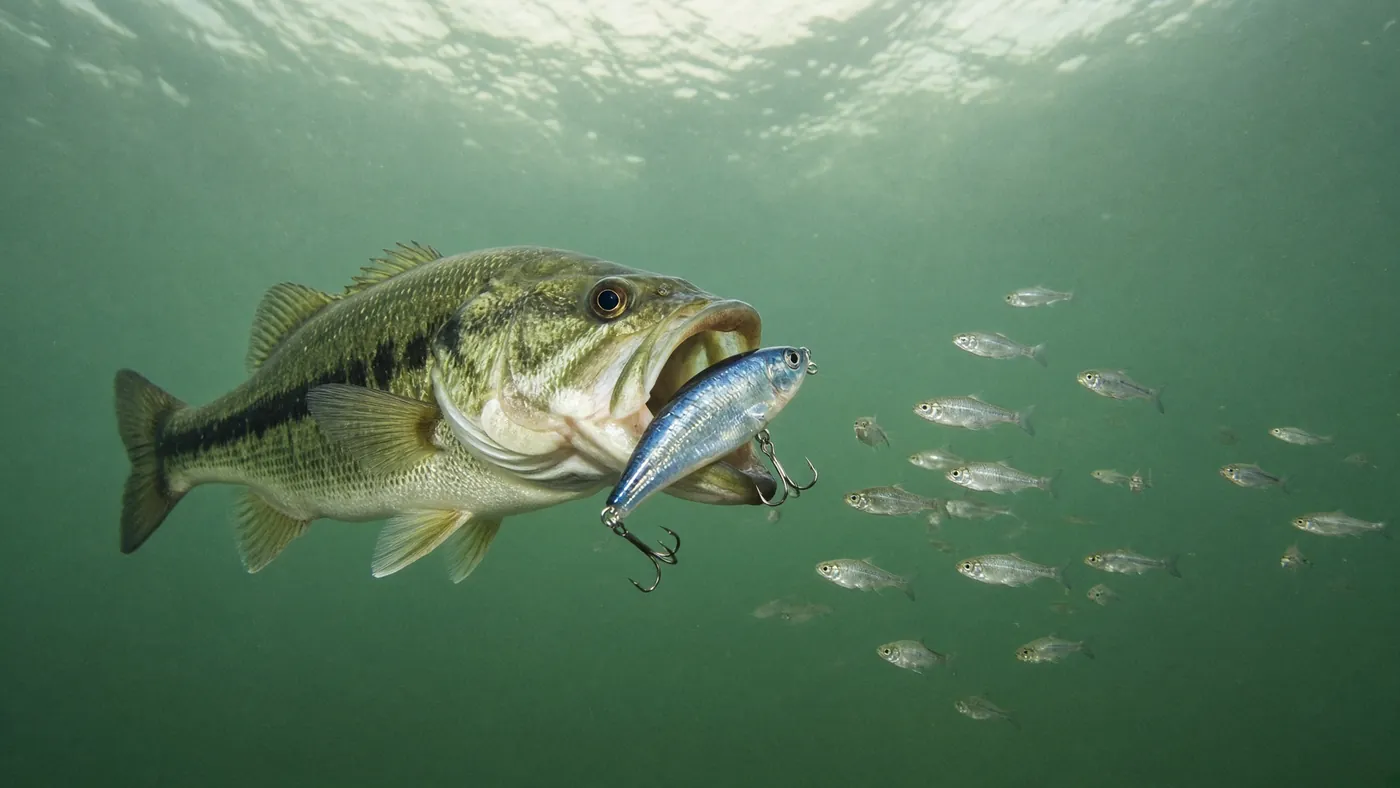
Fall is when bass feed harder than at any other time of the year. As the water drops from summer highs through the 60s and into the 50s, shad school up and push shallow, and bass follow them with single-minded intensity. Fast reaction lures dominate.
But “fall” isn’t one season. It’s three stages, and the lure that crushes them in September can go quiet in November. Here’s what to throw at each stage, with the sizes, colors and blade choices from Bass Fishing Mastery.
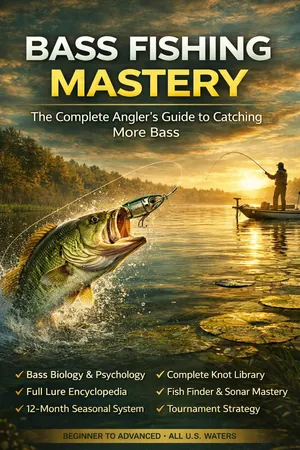
Bass Fishing Mastery: the complete 86-page bass guide behind this article. See the guide →
The Fall Lure Chart
| Stage | Typical water | Where bass are | Lures |
|---|---|---|---|
| Early fall | 70 to 80°F, falling | Creek arm mouths and points, following shad | Lipless crankbait, swim jig, swimbait, medium crankbait |
| Mid-fall | 60 to 72°F | Creek backs and shallow flats | Spinnerbait, swimbait, lipless crankbait, shad-colored crankbaits |
| Late fall | Below 58°F | Sliding deeper | Jig, Texas rig, medium-diving crankbait |
Go by your thermometer, not the calendar. Not sure which stage your lake is in? Read when fall bass fishing really starts.
Early and Mid-Fall: The Speed Baits
Lipless Crankbait
The lipless crankbait has no bill and vibrates tightly at any speed and any depth. It’s a year-round bait, but in fall open water it covers huge areas fast while you search for the fish that are chasing shad. Where there’s still grass, rip it through the vegetation: that’s what triggers the reaction strike.
Spinnerbait: Pick the Blade
The blade choice matters more than the brand:
| Blade | What it does | When to use it in fall |
|---|---|---|
| Willow leaf | Fast spin, maximum flash, little vibration | Clear water, fast retrieves, mimicking fast-moving shad |
| Colorado | Slow rotation, maximum thump | Murky or stained water, slow-rolling as the water cools |
| Indiana | A compromise between the two | Stained to clear water, when you’re unsure |
| Tandem | Two blades, flash plus vibration | The default tournament setup for most conditions |
Swim Jig and Swimbait
A 3/8 to 1/2 oz swim jig goes through sparse grass and around cover, exactly where fall bass ambush bait. A paddle-tail swimbait gives you the most natural shad profile. Hold it at the surface and retrieve at the speed you plan to fish: if the tail doesn’t beat, reel faster; if the bait spins, slow down.
Medium-Diving Crankbait
The 6 to 12 foot crankbait works the points and channel edges where shad transition into the creek arms. Bump the bottom or cover on every cast. If you never touch anything, you aren’t deep enough.
Match the Size, Not Just the Color
This is the most expensive fall mistake. This year’s shad are only 2 to 3 inches long. Bass keyed on them will slap at your magnum bait without eating it.
When you get short strikes and swipes, don’t change spots: change size. Downsize to match the juvenile shad, and half-hearted swipes turn into solid strikes. In early fall, the size of the bait drives your downsizing, not the weather.
Fall Colors
Shad patterns dominate from September to November:
- Chrome and blue
- White and silver
- Pearl
In stained water, chartreuse and white gives the fish more to see.
Late Fall: Slow Down Below 58°F
When the water drops below 58°F, change abruptly. Swap the speed lures for:
- A jig worked slowly along the first drop
- A Texas rig on cover close to deeper water
- A medium-diving crankbait on points and channel edges
Bites get less aggressive, but the quality improves. Once the water falls below 52 to 55°F, the fall shad pattern ends and bass move toward deeper, stable structure. That’s the doorway to winter fishing.
Best Lures for Bass in October and November
Most of the fall searching happens in October, and that is also when the lake gives the clearest answer. Here is the month-by-month view from the guide’s 12-month chart, so you can pick the column that matches your water today.
| Month | Typical water | Where bass are | What to tie on |
|---|---|---|---|
| September | 70 to 80°F | Creek arms, tracking the shad | Lipless crankbait, swim jig, swimbaits |
| October | 60 to 72°F | Backs of creeks, shallow flats | Shad-colored crankbaits, spinnerbaits, swim jig |
| November | 50 to 62°F | Sliding toward deeper water | Jig, Texas rig, medium-diving crankbait |
October is the peak of the migration. The shad have pushed all the way into the creek backs, the flats next to them can hold a remarkable number of fish, and fast baits earn their keep. Cover water with a spinnerbait or a shad-colored crankbait until a fish tells you where the school is.
November is the month that splits. Early on, a warm stretch can feel like October. After the first serious cooling, treat 58°F as the switch: once the water is below it, the fast baits give way to a jig, a Texas rig and a medium diver. When it keeps falling into the low to mid 50s, the shad pattern is done and the fish head for winter structure, which is where December bass fishing picks up.
The First Cold Snap: When the Fall Bite Peaks
One weather event deserves its own plan. The first cold snap that knocks the water down 5 degrees or more often sets off the best bass fishing of the whole year, usually within a day or two.
- Watch the bait, not the bank. Shad react first. They bunch up and slide toward creeks and pockets, and any water holding visible bait is worth a cast.
- Look for the shad kill. On a hard snap, threadfin shad can die in large numbers. The dying bait pulls bass up into chaotic surface schools, and if you find shad flickering on top, stay all day.
- Let birds do the scouting. Gulls, terns and herons find feeding bass before you do. When baitfish jump, they jump away from the predator, so the bass are coming from the other side.
- Throw the shad profile. White, silver and chrome, sized to the bait you see.
Rod, Line and Hooks for the Fall Lineup
Fall baits are mostly moving baits, and the guide’s rod and line charts are specific about them.
| Lure | Rod | Line |
|---|---|---|
| Spinnerbait | 7’0″ to 7’3″ medium-heavy, moderate-fast | 15 to 17 lb fluorocarbon |
| Shallow crankbait | 7’0″ to 7’3″ medium, moderate | 12 to 15 lb fluorocarbon |
| Deep crankbait | 7’4″ to 7’8″ medium-heavy, moderate-fast | 10 to 12 lb monofilament |
| Casting jig | 7’0″ to 7’3″ heavy, fast | 17 to 20 lb fluorocarbon, or braid in heavy cover |
| Texas rig (open water) | 7’0″ to 7’3″ medium-heavy, fast | 12 to 15 lb fluorocarbon |
Match the hooks to the cover, too. If the grass is below the path of your bait, a lipless crankbait ripped over and through the tops is the play. If the grass rises above the bait, put away the trebles and fish a single hook, or skip that water. For the wider lineup beyond fall, see the best bass lures by type.
Where to Throw Them
Two rules that matter all fall:
- Follow the bait, not the bank. Any area holding visible baitfish is a target, and the fish move with the shad. The full pattern is in fall bass in creek arms.
- Fish the wind-blown side. Wind pushes bait onto the bank it hits, and the bass follow. The calm bank behind you is a waiting room.
When bass are blowing up on bait and ignoring everything you throw, that’s a different problem with its own fix: how to catch schooling bass.
A Fall Box in One List
- 1 lipless crankbait in chrome and blue
- 1 spinnerbait with willow blades, 1 with a Colorado blade
- 1 swim jig and a few paddle-tail swimbaits in white or pearl
- 1 medium-diving crankbait in a shad pattern
- Smaller versions of each for when the fish want 2 to 3 inch bait
- 1 jig and Texas rig plastics for the late-fall slowdown
Quick Answers
What is the best lure for fall bass fishing?
In early and mid-fall, a lipless crankbait, spinnerbait or swimbait in a shad color, sized to match the local shad. Below 58°F, slow down with a jig or Texas rig.
What color lure for bass in the fall?
Shad colors: chrome and blue, white and silver, or pearl.
Why are bass short striking my lure in the fall?
Your lure is probably bigger than the shad they’re eating. This year’s shad are 2 to 3 inches. Downsize before you change spots.
What is the best bait for bass in October?
In 60 to 72°F water, shad-colored crankbaits, spinnerbaits and a swim jig, fished around the backs of creeks and the shallow flats next to them.
What lures work for bass in November?
As the water drops through the 50s, switch from speed baits to a jig, a Texas rig and a medium-diving crankbait, especially once it falls below 58°F.
Tight lines,
— David