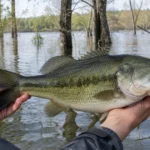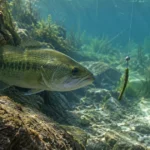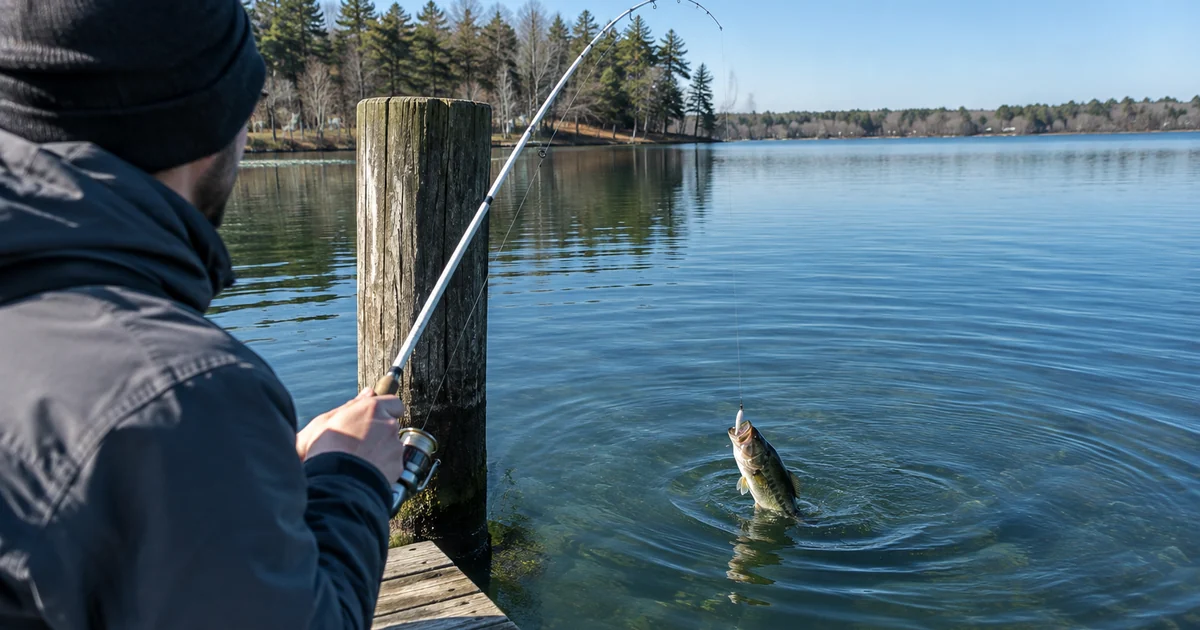
The day after a cold front is a gear problem as much as a location problem. The bass are still in the lake, but they’ve dropped deeper, pulled tight to cover and won’t move far for a bait. Your heavy baitcasters and fast search lures were built for a different day. What works now is a finesse spinning setup, light fluorocarbon and a cadence slow enough to feel uncomfortable.
This guide is the technical side of that day: five finesse rigs with the weight, hook, rod, line and retrieve for each, where to aim them, and how to keep fish pinned on light line. Everything comes from the finesse and weather chapters of Bass Fishing Mastery.
Bass Fishing Mastery: the complete 86-page bass guide behind this article. See the guide →
What Changed Under the Surface
The culprit is the swim bladder, the gas-filled organ a bass uses to stay neutrally buoyant. It responds to air pressure, and the sharp pressure spike behind a front leaves fish sluggish and unwilling to eat. Add cold air and a high, bright sky, and you get the day the weather chapter ranks as the hardest you’ll face.
Three consequences shape every gear decision below:
- Position: bass sit deeper, pressed against the deepest cover they can find.
- Reach: they won’t travel far to eat, so the bait has to come to them and stay there.
- Mood: they’re not feeding hard, but a slow, persistent presentation near them can still draw an aggression strike. That’s the same territorial reflex a bass shows on a bed.
So the job is simple to state: put a small bait right on the cover and keep it there as long as possible with as little motion as possible. That’s the shared principle of every finesse rig.
The Post-Front Finesse Rig Chart
| Rig | Weight | Bait / hook | Rod | Line |
|---|---|---|---|---|
| Ned rig | 1/15-3/16 oz mushroom head | Buoyant ElaZtech bait (e.g. Z-Man TRD) | 6’8″-7’0″ light or medium-light, fast, spinning | 6-10 lb fluorocarbon |
| Shaky head | 1/8-1/4 oz stand-up head | 4-5″ finesse worm | Finesse spinning rod (same family as the Ned) | 6-10 lb fluorocarbon |
| Drop shot | 3/16 oz shallow, 1/4-3/8 oz deeper | Size 1-2 drop shot hook, nose-hooked plastic | 6’10″-7’2″ medium-light, fast, spinning | 8-12 lb fluorocarbon |
| Finesse jig | 1/8-1/4 oz | Small craw trailer (about 3″) | Spinning gear | 8-12 lb fluorocarbon |
| Wacky rig | Weightless, or 1/32-1/16 oz nail weight | Stick bait hooked in the center | Finesse spinning rod | Light fluorocarbon, finesse range |
Fluorocarbon is the default here for a reason: it’s nearly invisible underwater, it sinks, and its 12 to 15% stretch keeps it sensitive. The one exception is a deep drop shot: there, a 30 lb braid main line tied to a 10 lb fluoro leader keeps you in touch with the bait.
Rig by Rig: Setup and Cadence
Ned rig: the one that works when nothing else does
The buoyant ElaZtech material makes the bait stand straight up off the bottom between moves. That’s the whole trick: it keeps fishing while you do nothing. Of all the finesse rigs, it’s the one the book singles out for post-front days, the moment when the rest of your box goes quiet.
Cadence: cast near the cover and let it hit bottom. Give it a couple of shakes (two, maybe three), then let it sit dead for a count of five to eight. Pull it forward about six inches and start the sequence again. If it feels too slow, you’re probably close to right.
Shaky head: hold the bait on the spot
Thread a finesse worm in the 4 to 5 inch range onto a stand-up jig head. The head stays planted while the tail waves.
Cadence: drag it to the target and let it settle. Then shake with the wrist only, not the arm, and don’t let the lure creep forward. The goal is bottom contact and time in the strike zone: the longer the bait sits there, the better.
Drop shot: for fish you can mark but can’t move
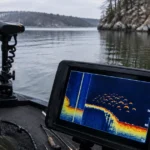
Because the plastic hovers at one depth and stays there, this is the rig for bass that sit under the boat on your screen and ignore everything that moves.
Setup: the standard Palomar-tied drop shot with an 18 to 24 inch tag, the lightest weight that still holds bottom, and a nose-hooked plastic lying flat. The full step-by-step tie, plus the deep-water version, is in winter bass on sonar.
Cadence: once the sinker is down and the slack is gone, keep the line at a slight angle and nod the rod tip in a steady rhythm. The sinker stays planted; only the worm trembles.
Hookset: reel down to the fish before you sweep up.
Finesse jig: a small profile with bulk
The ebook lists post-front days, along with clear and cold water, as the finesse jig’s home turf. Pair it with a small craw trailer of about 3 inches. That’s the cold-water, finicky-fish trailer, with a slow fall and subtle action.
Tuning: a stand-up head is the finesse choice. Trim the skirt so it ends 1/4 to 1/2 inch past the hook bend, since a long skirt hides the hook and costs hookups. Make sure the trailer doesn’t block the hook point or gap.
Wacky rig: the horizontal fall
A stick bait hooked through the middle falls flat, with both ends fluttering. Most strikes come on the fall.
Cadence: same as any wacky rig (see the best bass lures for the full routine): drop it on the cover on slack line, watch for the sideways jump, and if there’s no bite, rest it a few seconds and twitch it once before letting it sink again. Depth range runs from 1 to 8 feet weightless to 6 to 15 feet with a nail weight pushed into the head. An O-ring around the middle stretches one bait from a cast or two to somewhere between 10 and 20.
Where to Aim the Bait
Gear only matters if the bait lands in the right place. Post-front, the target list gets short:
- The single best piece of cover you can find, on its shady or densest side. The bait should land right on it, not a few feet off.
- The deepest water available near that cover. Post-front, the weather chapter boils it down to three words: smaller, slower, deeper.
- The shaded side of wood. In sunny conditions, bass orient to shade, so work the shady side of a laydown. Start at the root ball, the deepest and most complex part, where the largest fish hold.
Normally the rule is to give a spot your best 3 to 5 casts and move on. Today the exception applies: when you know fish are on a piece of cover, from your sonar or from earlier bites, staying is justified. Repeated, patient casts are how you trigger that aggression strike.
In cold, clear water, a little garlic or anise scent on your soft plastic can be the difference when a reluctant fish is holding the bait. It doesn’t replace presentation.
Landing Fish on Light Line
On a day with few bites, each lost fish costs a lot. Light line raises the stakes, so the details matter.
- Drag: set it to 25 to 30% of the line’s rated breaking strength. As a reference, that’s 4 to 5 lb of drag for 15 lb fluorocarbon. Test it with a handheld scale at a 45-degree rod angle, and recheck it every session because drag washers compress.
- Knots: use the Palomar on every finesse rig, drop shot included. It keeps close to 100% of line strength, as long as you moisten it before pulling it tight.
- Hooks: run the point over a thumbnail at a 45-degree angle. A sharp hook grabs; one that skates across needs the file or the trash.
- Missed fish: if you’re getting bites and missing them, check three things before blaming luck: a dull hook, a slow hookset or a drag set too loose.
When Fish Follow and Still Won’t Eat
On clear post-front days you’ll often see bass follow the bait without taking it. Forward-facing sonar has shown that bass follow lures far more than anglers realize but refuse to commit. When that happens, the answer is almost always one of three things: slow the retrieve, lengthen the pauses, or go smaller.
As the barometer starts to drop again, bass begin to wake up. That’s your cue to put away the lightest rigs and step up to medium-speed baits. Until then, keep the spinning rods in hand. For how the rest of the day’s timing plays out, see the best time to fish for bass, and for the other 14 tough-day scenarios, see our bass fishing tips for real on-the-water problems. In late fall, the water temperature chart helps you see whether a front has pushed your lake into its winter range.
Quick Answers
What is the best bait for bass after a cold front?
A finesse rig placed right on the best piece of cover: a Ned rig, shaky head, drop shot or finesse jig, all on spinning tackle with light fluoro. The Ned rig is the most reliable of the four on post-front days.
What line should I use for finesse fishing after a front?
Fluorocarbon throughout. Ned rig and other finesse rigs: 6 to 10 lb. Drop shot and finesse jig: 8 to 12 lb. Deep drop shot: 30 lb braid tied to a 10 lb fluoro leader.
Why do bass stop biting after a cold front?
The sharp rise in barometric pressure affects their swim bladder and makes them lethargic. They hold deeper and tighter to cover and won’t chase, so the bait has to come to them.
When do bass start biting again after a cold front?
Once the pressure turns and starts dropping, bass begin to wake up. Track the barometer trend on an app and speed up your presentations as it falls.
Tight lines,
— David