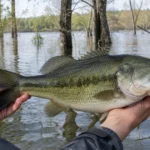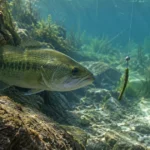
Every September, the fall videos start rolling in: bass chasing shad, blow-ups on topwater, limits from the backs of creeks. And every September, thousands of anglers head out, throw fall baits and catch nothing.
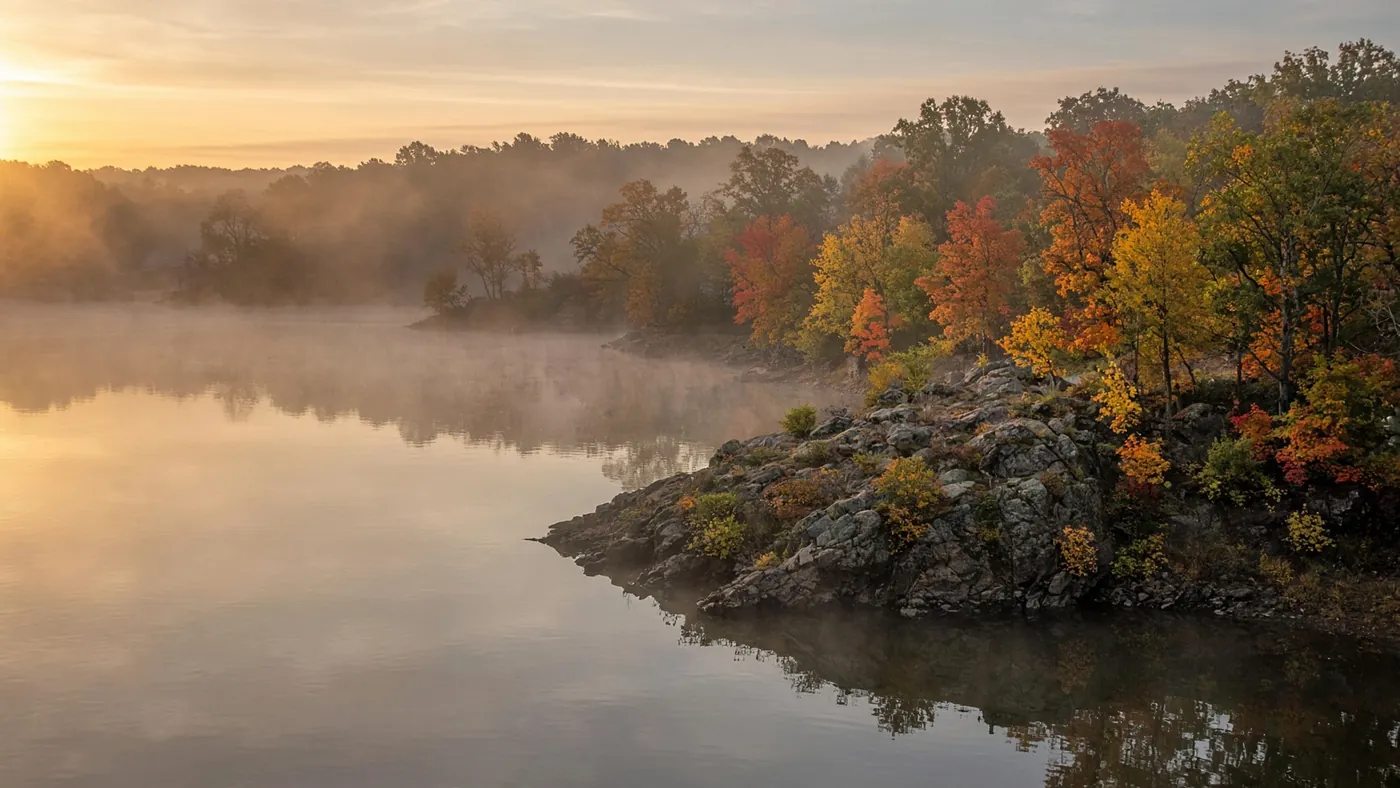
The reason is simple. Fall is a front, not a date. It rolls across the country lake by lake, at the speed of cool nights, and it can reach Minnesota weeks before it reaches Texas. Your lake enters fall when the water temperature says so. Here’s how to read it, using the seasonal system in Bass Fishing Mastery.
Bass Fishing Mastery: the complete 86-page bass guide behind this article. See the guide →
The Rule: Different Month, Same Number
Fishing the calendar instead of the thermometer is one of the costliest bass mistakes there is. The seasons don’t start on dates. They start at temperatures, and those temperatures arrive weeks apart from one end of the country to the other.
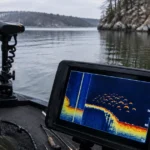
The fix costs about ten dollars: a thermometer, or the temperature readout on your electronics, checked every trip. The numbers below are the real fall calendar.
The Fall Numbers
| Water temperature | What’s happening | What to do |
|---|---|---|
| Still in the 80s | Your lake is honestly still in summer | Run the summer program: dawn, dusk, shade and depth at midday |
| Falling through the 70s | Shad start moving from the main lake into the creek arms | Fish creek arm mouths and points with lipless crankbaits, swim jigs, swimbaits |
| Falling through the 60s | The fall feed: bass follow shad into the creek backs and onto shallow flats | Fast presentations: spinnerbaits, swimbaits, lipless crankbaits |
| Below 58°F | The transition | Slow down: jigs, Texas rigs, medium-diving crankbaits |
| Below 52 to 55°F | The fall shad pattern ends | Bass slide toward deeper, stable structure |
As water falls from summer highs back through the 60s and into the 50s, bass enter their most aggressive feeding period of the year. That’s the window you’re waiting for.
The Trigger: The First Real Cold Snap
The single best sign that fall has arrived is the first cold snap that drops the water temperature 5 degrees or more. It often triggers the best bass fishing of the entire year within 24 to 48 hours.
Here’s why. The bait feels it first. Shad start ganging up and sliding toward creeks and pockets. On hard snaps, some threadfin shad die in large numbers, and bass gorge on easy calories. If you find dying shad flickering on the surface, stay all day: that feeding frenzy has a short calendar.
Watch for diving birds too. Terns, gulls and herons find bait before you do, and they’re free scouts.
If You Fish in the South
“My water is still 84 degrees and the fall videos don’t match.” That’s normal. Your lake is still in summer, and there’s nothing wrong with your fishing.
Run the summer program without apology: fish dawn and dusk, work shade and depth at midday, and treat every fall tactic as a preview. Your opening day is the week your water slides out of the 80s. Watch for the first real string of cool nights, and check the number.
For the summer program, see best bass lures for summer.
Same Number, Different Season
A thermometer reading means nothing without its direction. 60°F in April and 60°F in November put bass in opposite moods:
- In spring, the water is rising and fish are moving up toward spawning areas.
- In fall, the water is falling. Bass are gorging on shad, then sliding deeper as it keeps dropping.
That’s why you log both the temperature and the trend. The full picture, band by band, is in the bass fishing water temperature chart.
A Simple Fall Checklist
- Check the water temperature every trip, and note whether it’s rising or falling.
- Still in the 80s? Fish summer patterns.
- Falling through the 70s and 60s? Follow the shad into the creek arms with fast, shad-colored baits.
- After a cold snap of 5 degrees or more, get on the water within 48 hours.
- Below 58°F, slow down. Below 52 to 55°F, start thinking winter.
For the lure lineup at each stage, see the best fall bass lures.
Quick Answers
What month does fall bass fishing start?
It depends on your water, not the month. The fall pattern starts when the water drops out of summer temperatures and shad move into the creek arms. That can be weeks apart from North to South.
What water temperature is best for fall bass fishing?
The heart of the fall feed is as the water falls through the 60s. Below 58°F, bass slow down; below 52 to 55°F, the fall shad pattern ends.
Does a cold front help or hurt fall bass fishing?
The first cold snap that drops the water 5 degrees or more often triggers the best fishing of the year within 24 to 48 hours, because it pushes shad toward the creeks and pockets.
Tight lines,
— David